Common Mushrooms
The following mushrooms are some of the MOST COMMON GENERA that you may find in Eastern South Dakota, Eastern North Dakota, Minnesota, Nebraska, and Iowa. In an attempt to keep this guide short, I have excluded many common fungi. However, the mushrooms listed below are a great starting point if you want to expand your mushroom foraging skills.
This guide only identifies to genus (except in rare circumstances) because many mushrooms are very difficult to make a species level identification. The mushrooms below are categorized by their spore bearing surface. This page is broken into six categories:
- Best Field Guides
- Gills (white spores)
- Gills (colored spores)
- Pores
- Teeth
- Other mushrooms (sphere, coral, morel…)
WARNING!
I am NOT a mycologist. Mushrooms in this guide may be incorrectly identified. Eating the wrong mushrooms could lead to a painful DEATH!
Best Field Guides for the Upper Midwest
This website would not have been possible without many of my favorite authors! Do not use the internet for final identification of a mushroom that you plan to consume. I have a stack of nearly 30 foraging books on my bookshelf. Here are my favorites:
Mushrooms of the Upper Midwest by Teresa Marrone – this should be the first guide you buy. Tons of awesome pictures and very well organized.
Mushrooms of the Midwest by Michael Kuo – I absolutely love this man. He is the creator of MushroomExpert.com and he keeps things simple. His book lists all mushrooms in alphabetical order and does NOT use common names. The glossary and index are combined into one section which speeds up the learning process. And lastly, the pictures of each mushroom are great! This book does not talk much about edibility though so choose a different book if you are a new mushroom hunter!
Mushrooms Demystified by David Arora – I have a very difficult time using this author’s key but no other book can compare to the mountains of knowledge contained in David’s mushroom guide.
Entangled Life by Merlin Sheldrake – this is NOT a guide book but the author is a beautiful person with eloquent writing and truly unique ideas. It will make you fall in love with mycology.
Websites to help with Mushroom Identification

Mushrooms with Gills (white spores)
Amanita spp.
Fly agaric, Death cap, Destroying angel…
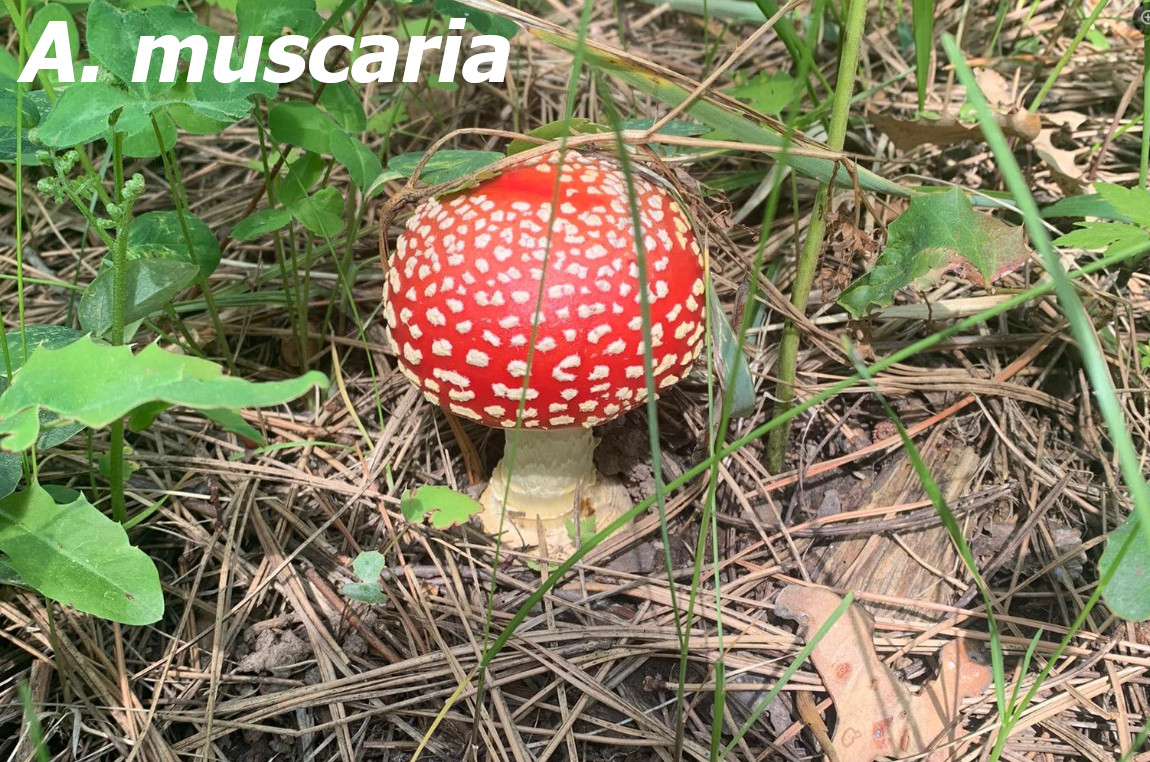
- Common species: A. muscaria, Amanita sect. Vaginatae
- Habitat: forest, mycorrhizal
- Spore Print: white
- Gills: free, pale white
- Local Look-alikes: Agaricus
Some Amanita are DEADLY POISONOUS!
A. muscaria is often considered the quintessential mushroom with its red cap and white warts. I have never seen it while mushroom hunting in Eastern SD but it is found frequently in Western SD.
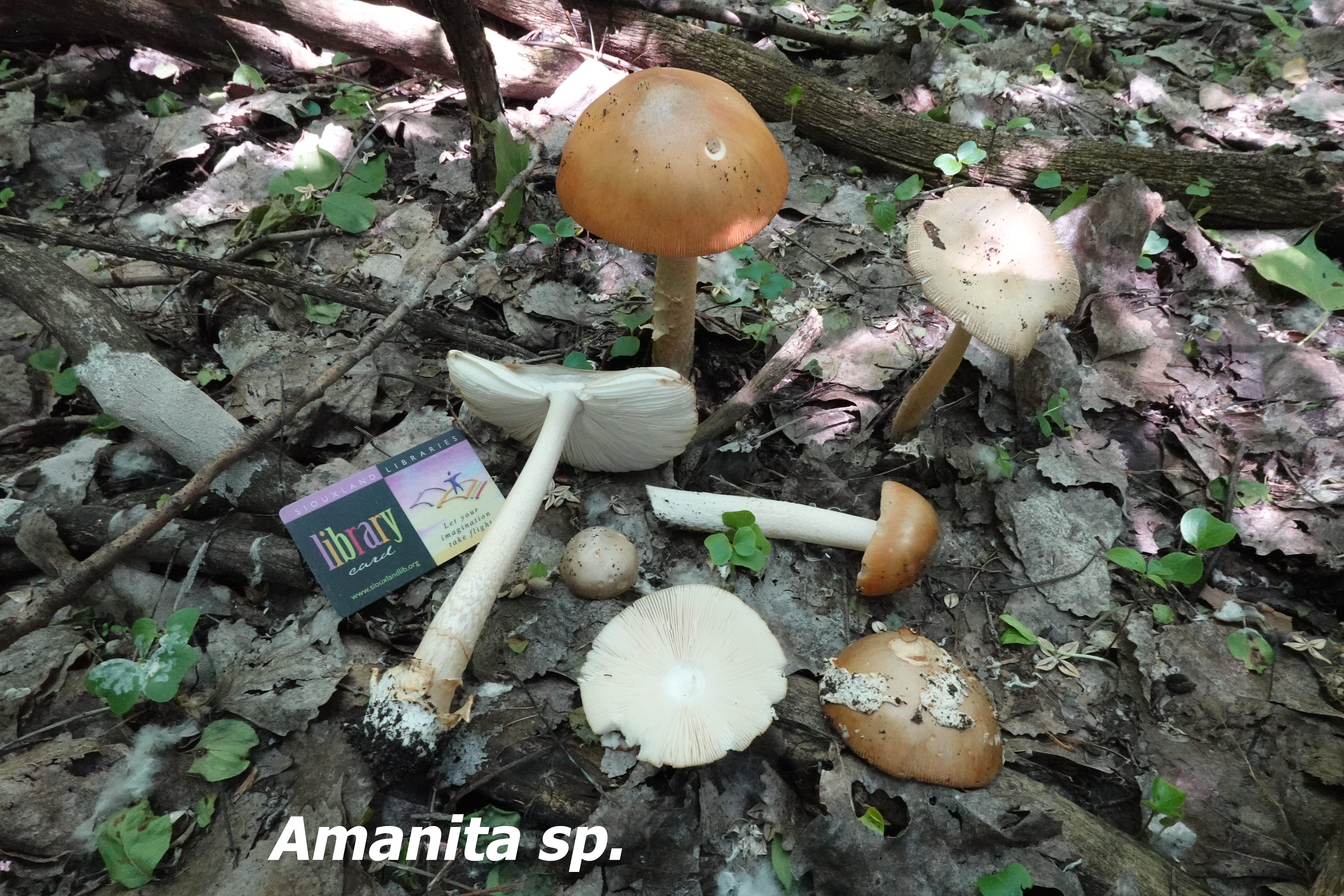
The ONLY Amanita I have personally found near Sioux Falls, SD is an Amanita in section Vaginatae. Many Amanita are distinguished by their terrestrial growth and a volva at the stem base. I know very little about this genus but all beginning mushroom hunters should at least be aware of it!
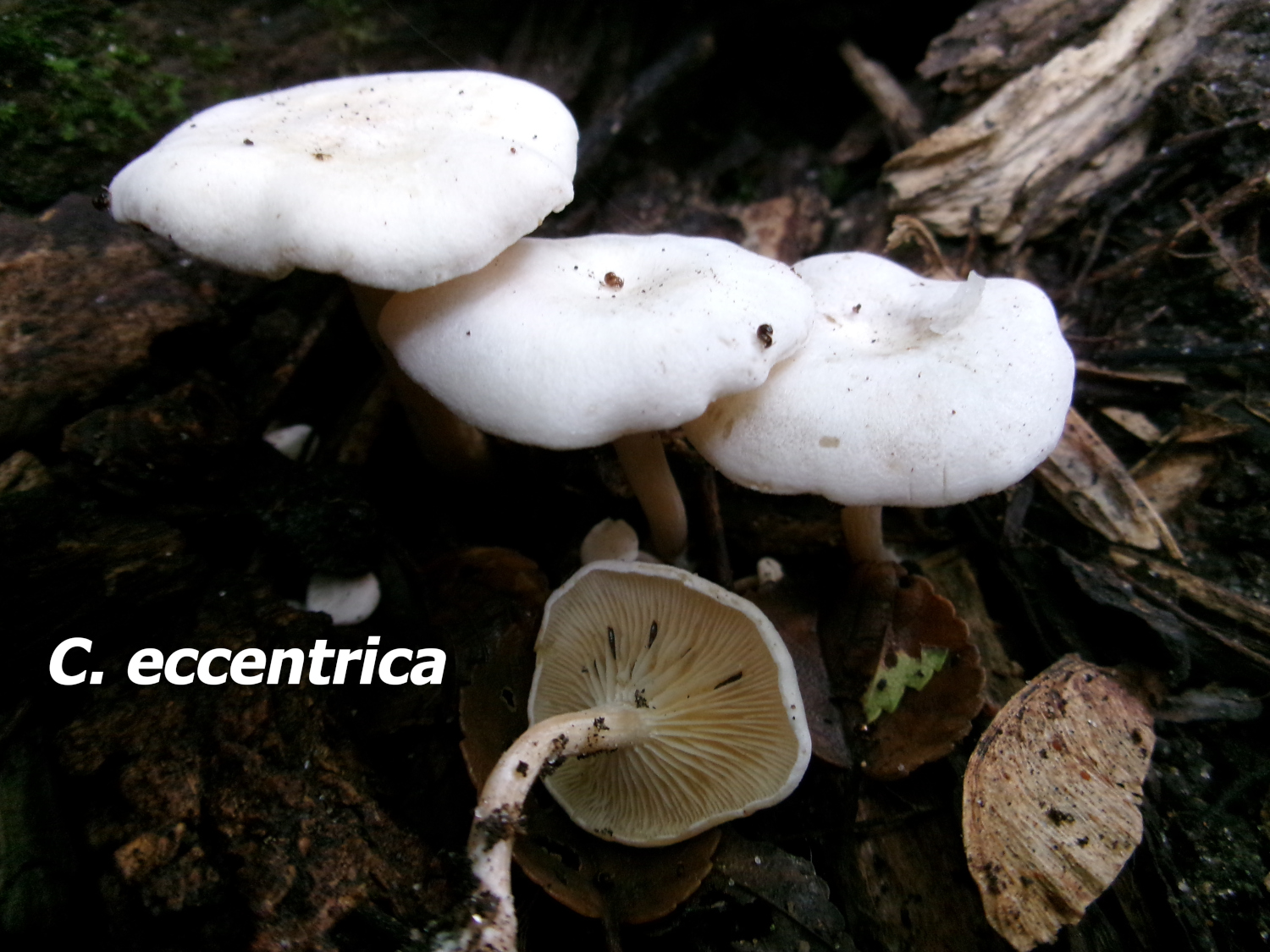
Clitocybe spp.
- Common genera:
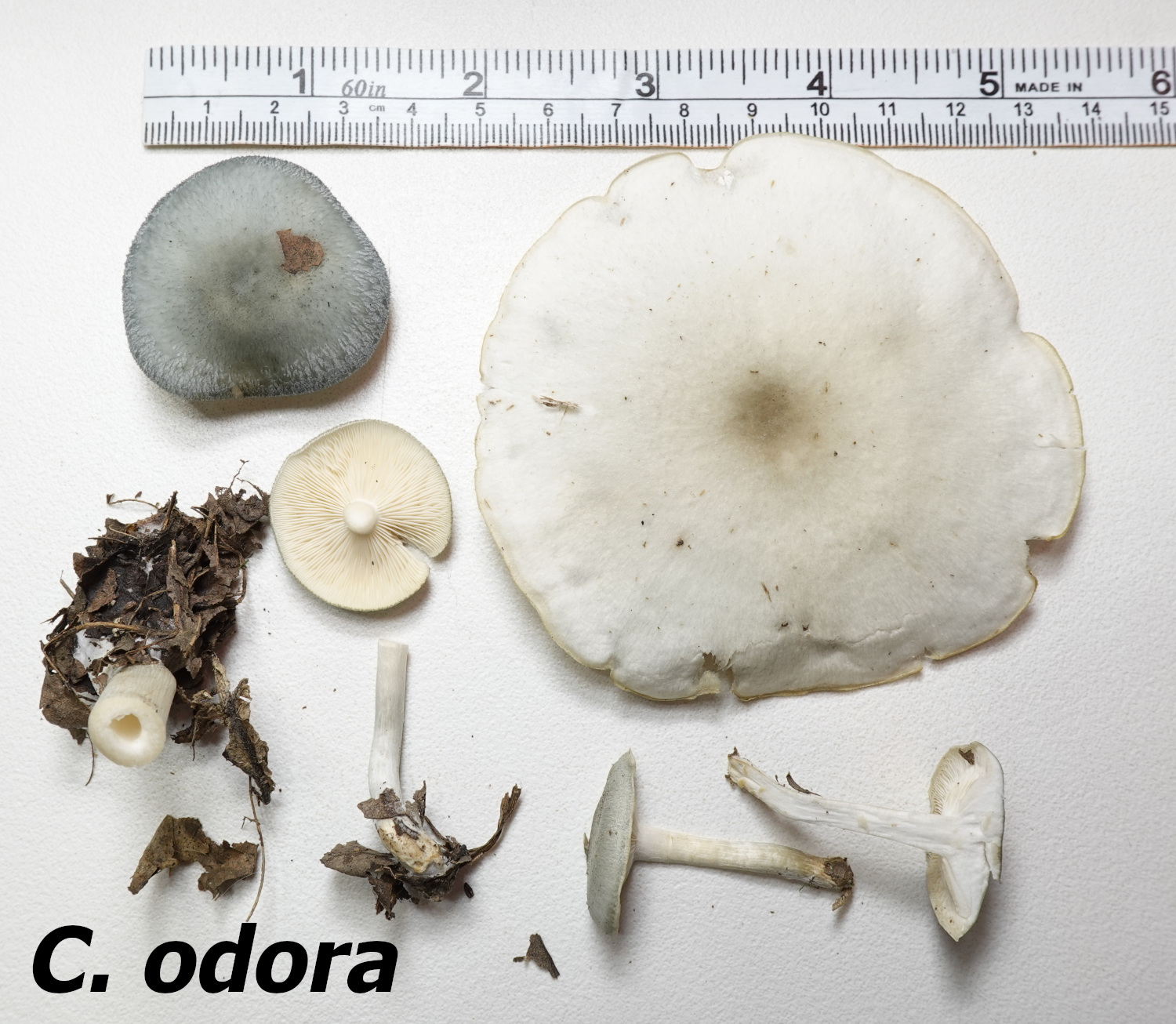
C. odoraCollybia odora, Clitocybe eccentrica - Habitat: saprobic in tree litter
- Spore print: white
- Gills: attached or running down stem
This is a genus that I frequently find in the summer at places like Good Earth State Park and Newton Hills.
Leuco… never mind
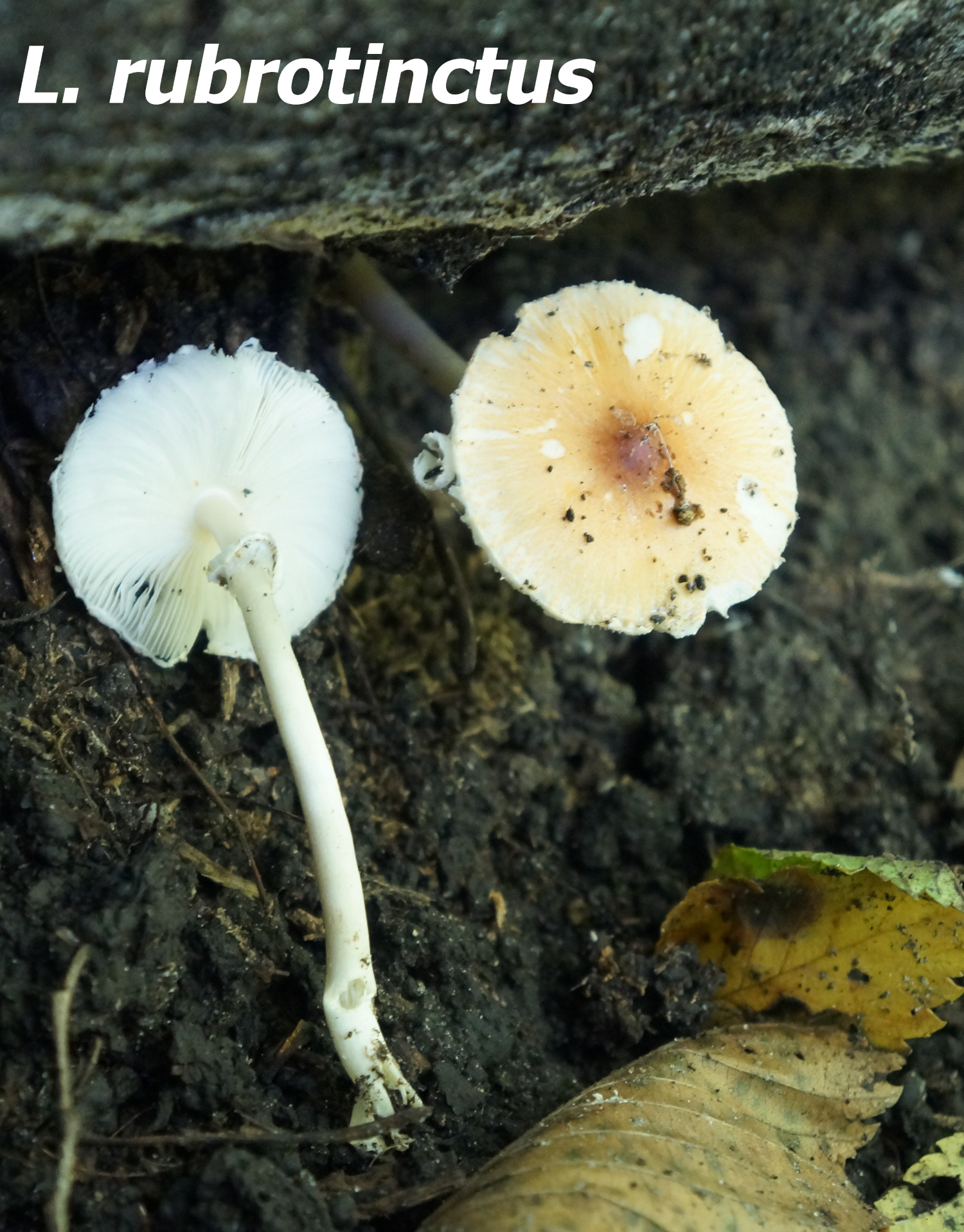
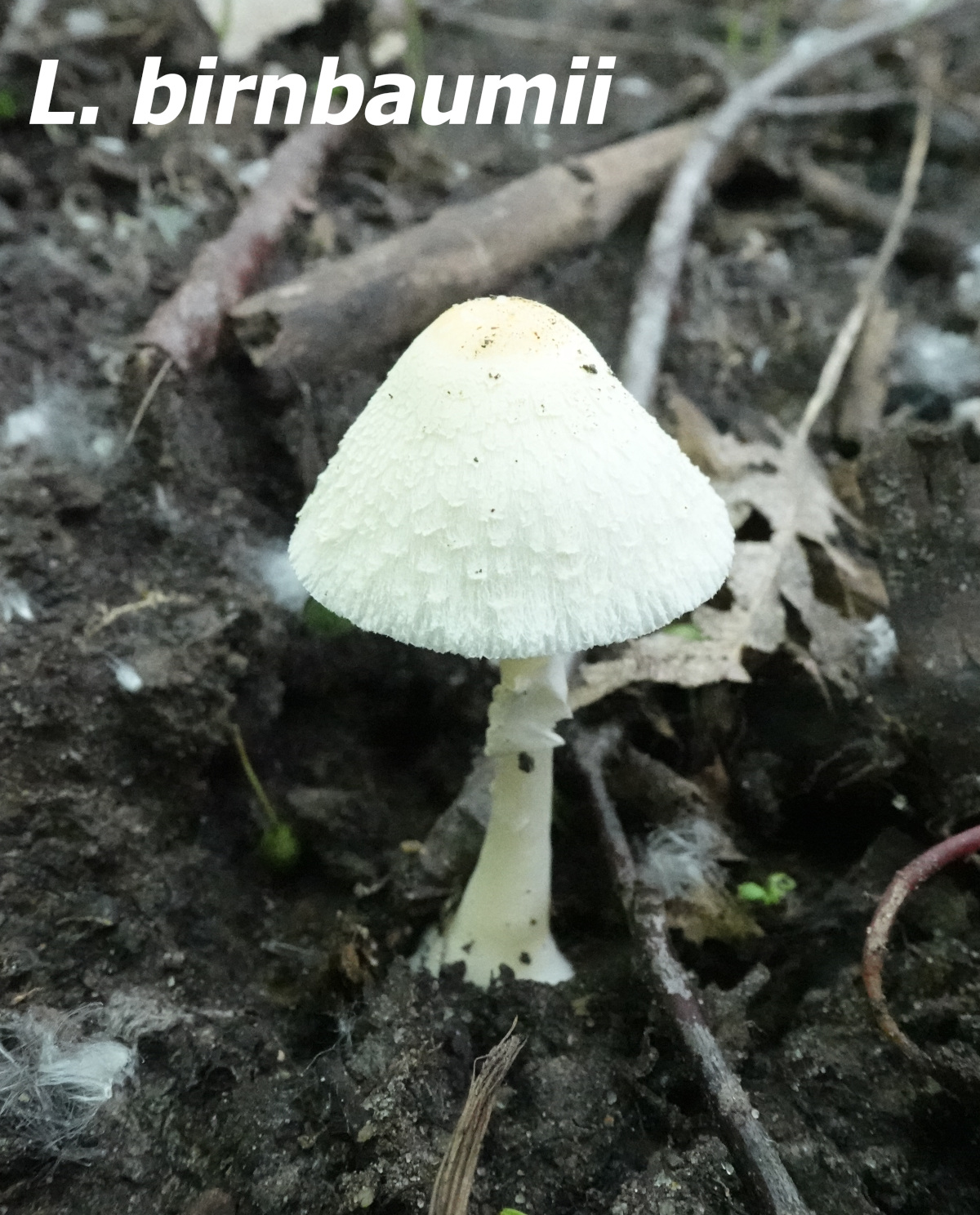
- Common genera: Macropsalliota americana, Leucocoprinus birnbaumii, Leucoagaricus rubrotinctus
- Look-alikes: Agaricus spp.
Apparently the genus Leucoagaricus is now deprecated per link. Species in the genus Leucocoprinus generally have lanky stems with a white ring, white gills, and white spore print.
Leucoagaricus rubrotinctus is unique in that it has a maroonish cap with a darker circle at the center.
Marasmius spp.
Parachute & Fairy Ring mushrooms
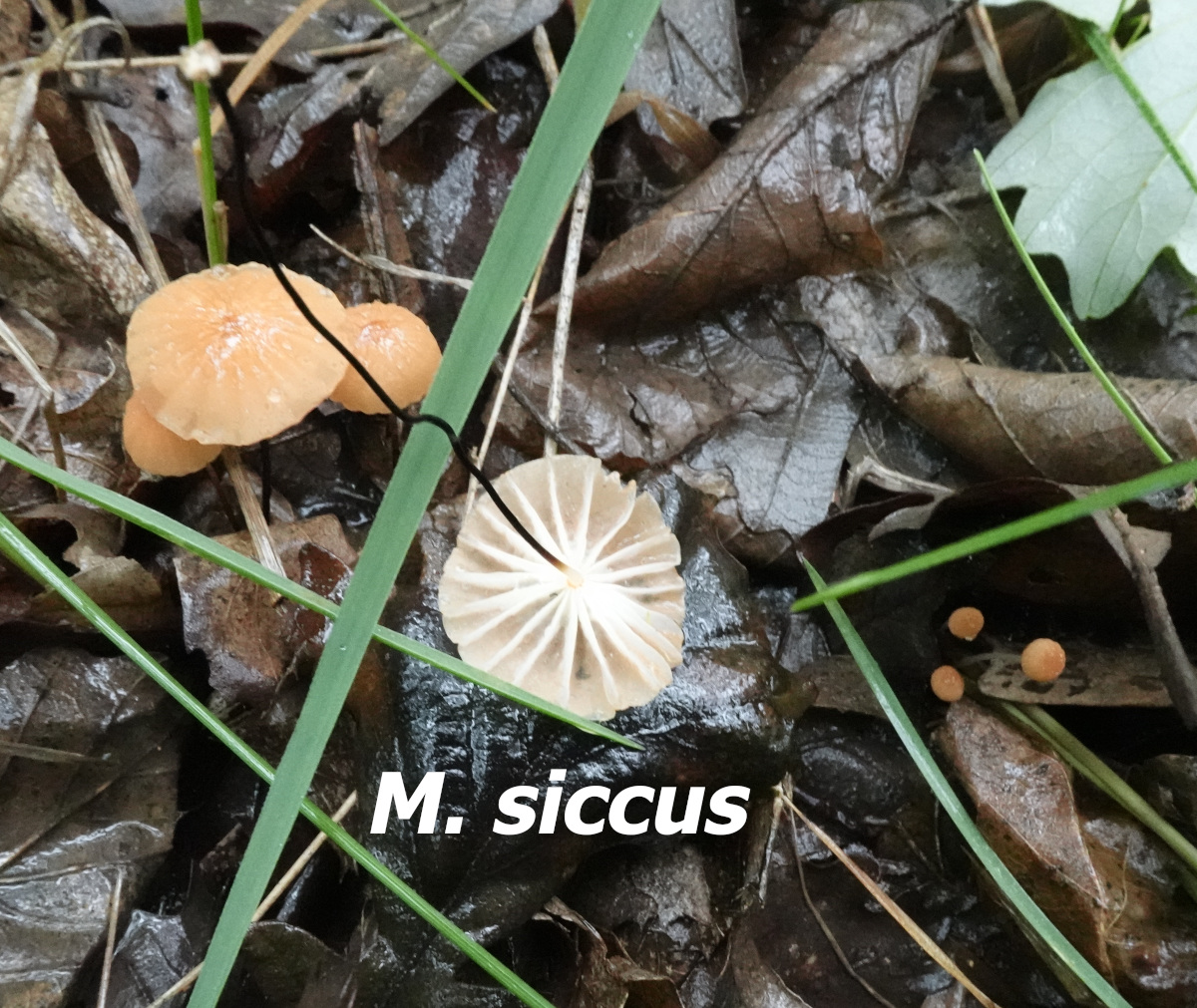
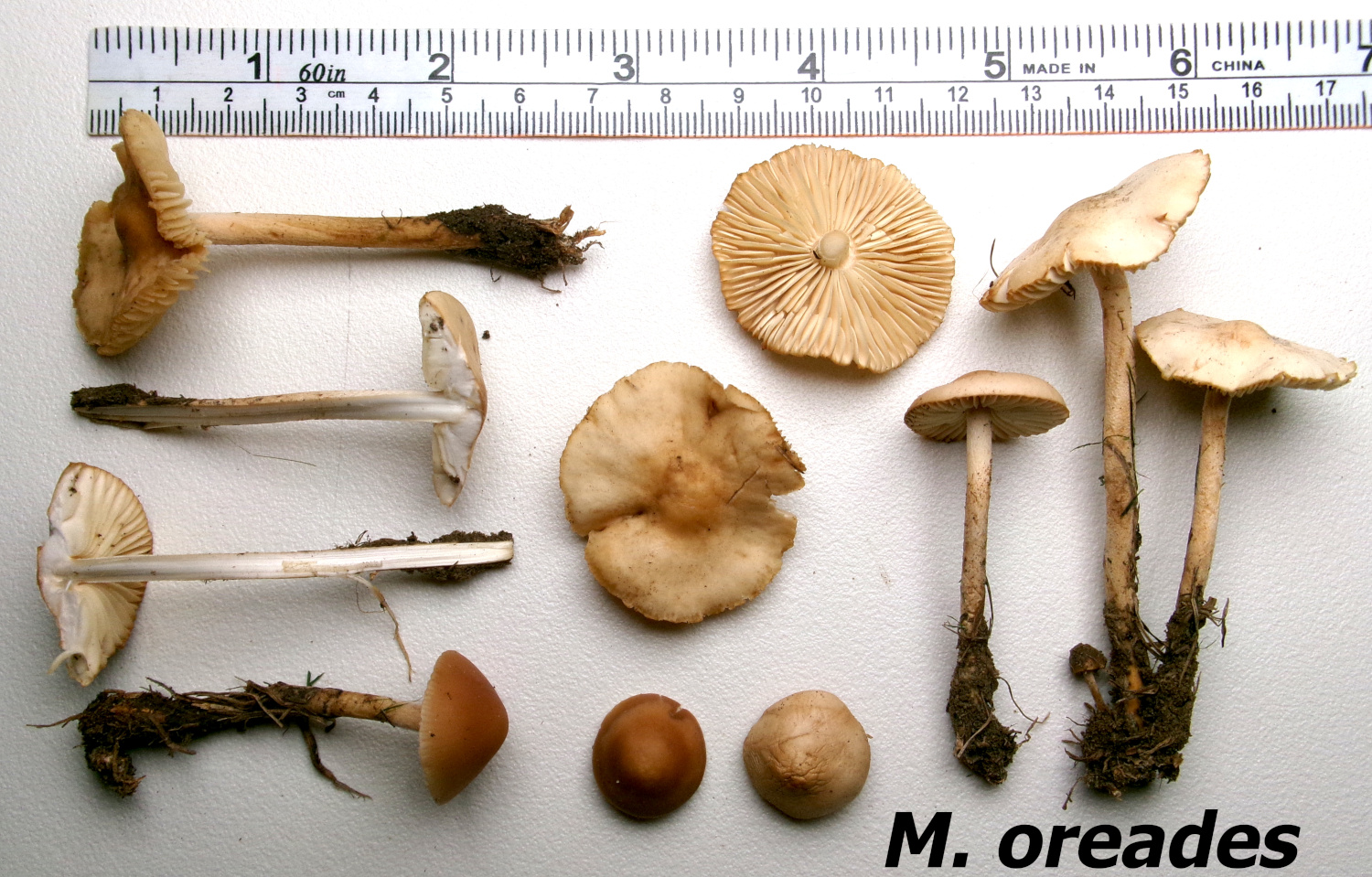
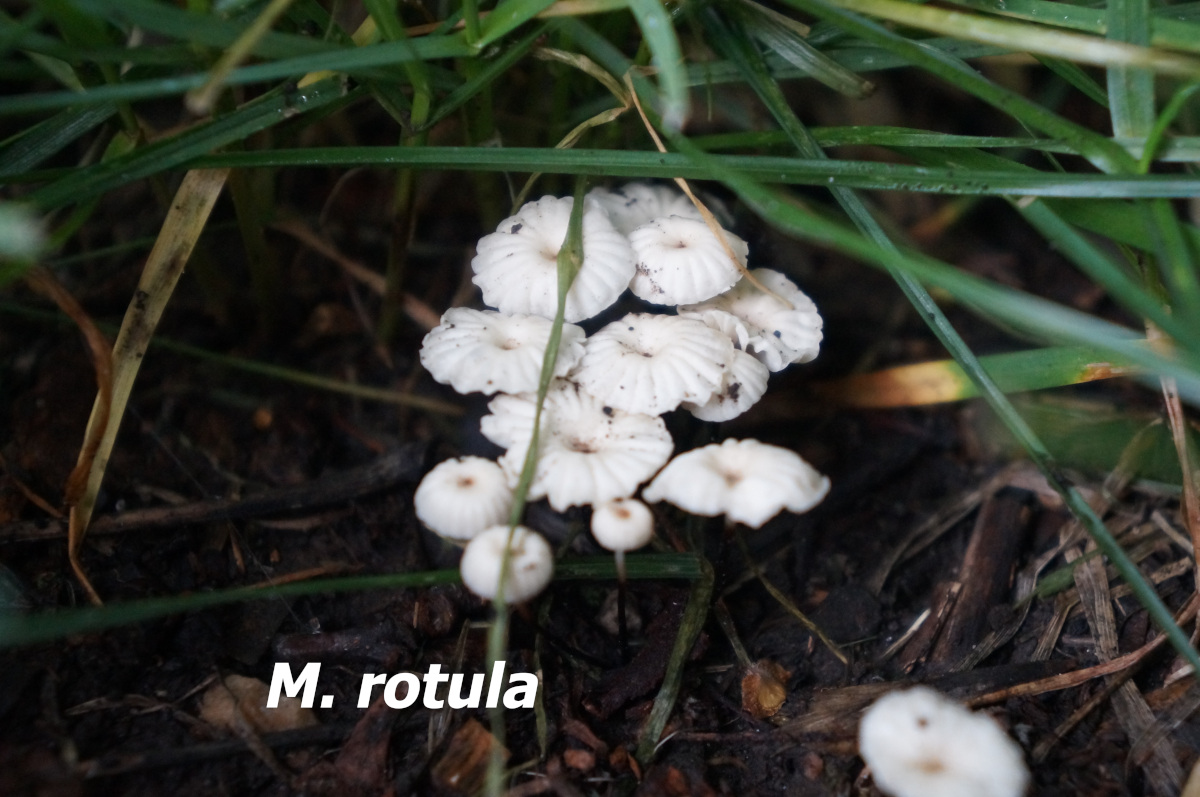
- Common species: M. oreades, M. rotula, M. siccus, etc
- Habitat: forest & urban, saprophytic
- Spore Print: white
- Gills: usually distant
- Local Look-alikes: Mycena, Rhizomarasmius, Conocybe
These mushrooms are generally quite small and tough. M. siccus and M. rotula are usually found in the forest on hardwood debris. Some species will shrivel up in the dryness then rehydrate in the rain.
M. oreades is generally much bigger and found growing on well fertilized lawns. This “fairy ring mushroom” easily makes my top 3 list of tastiest mushrooms to forage and eat here in Sioux Falls, SD. BUT! New mushroom hunters must use caution as I have found poisonous genera such as Conocybe and Panaeolus growing near M. oreades fruitings.
Mycena spp.
Common Bonnet, many other common names!
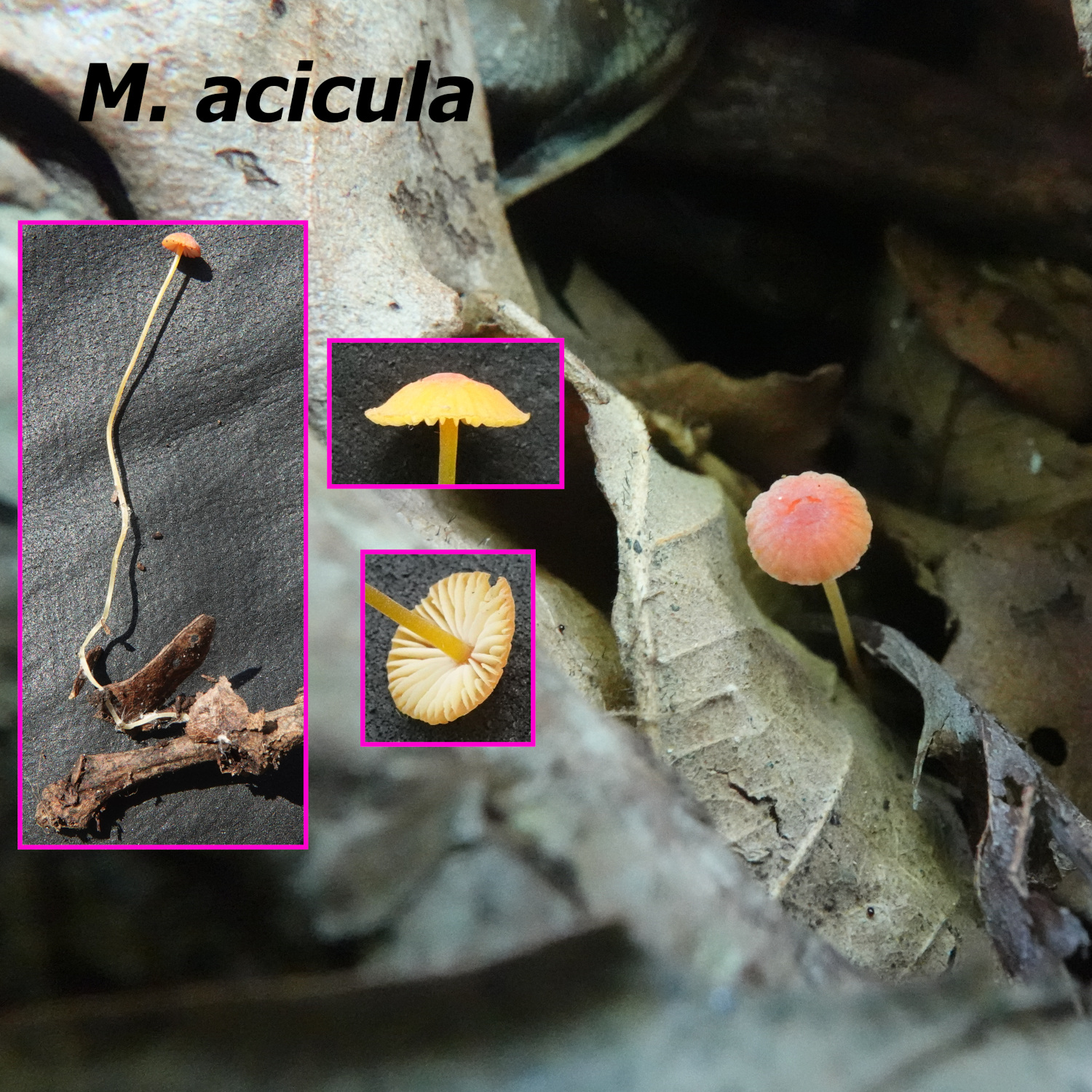
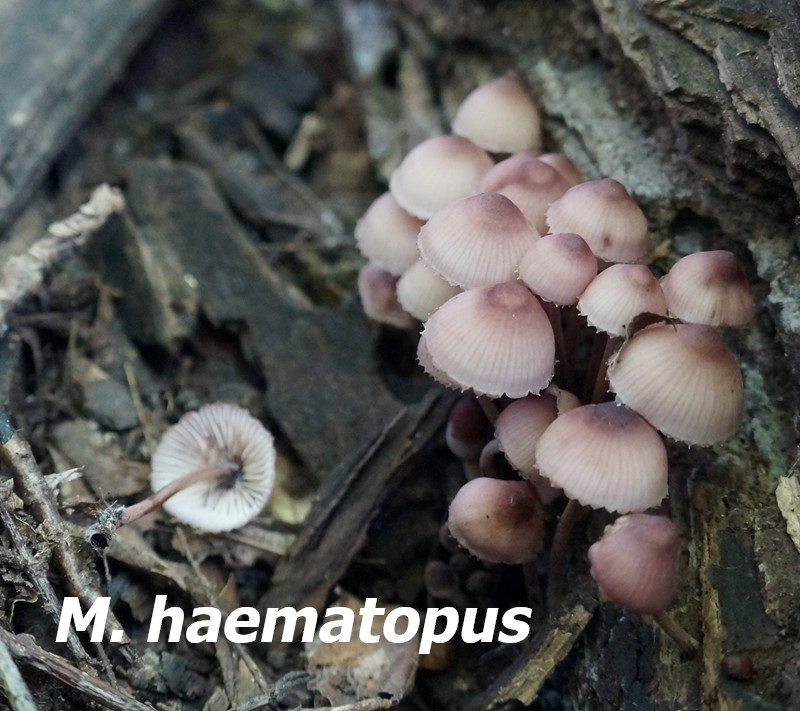
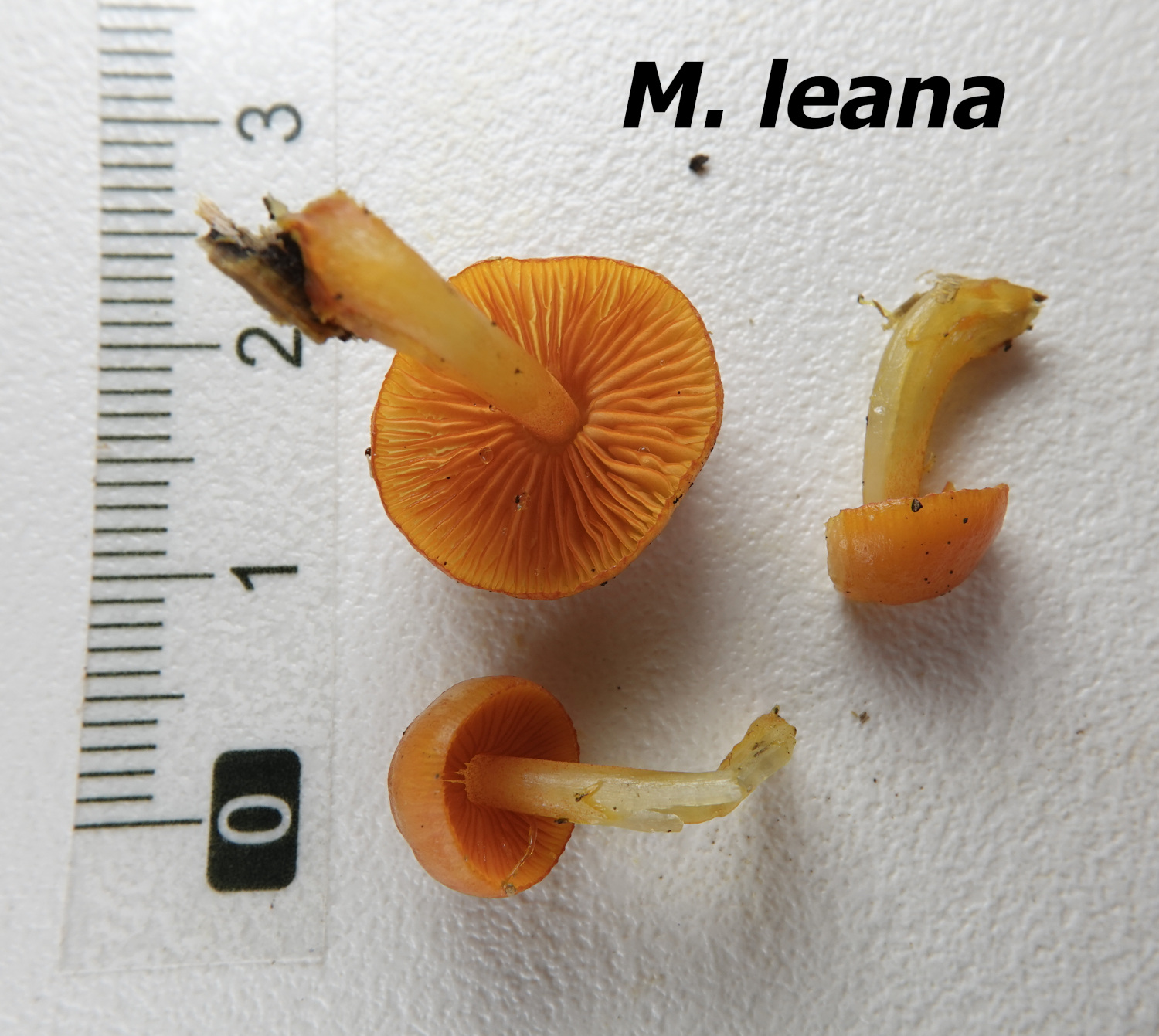
- Common species: M. haematopus, M. galericulata, M. acicula, M. leana, etc
- Habitat: forests, saprophytic
- Spore Print: white
- Gills: attached
- Local Look-alikes: Marasmius, Clitocybe, small Pluteus, LBM’s
The main species shared here are the colorful ones as these seem to get the most attention. Many Mycena are seen as “little boring mushrooms” and not given much attention. They are generally found growing on decaying logs and forest litter.
M. haematopus is quite unique because the stem looks like it is bleeding when cut.
Oudemansiella spp.
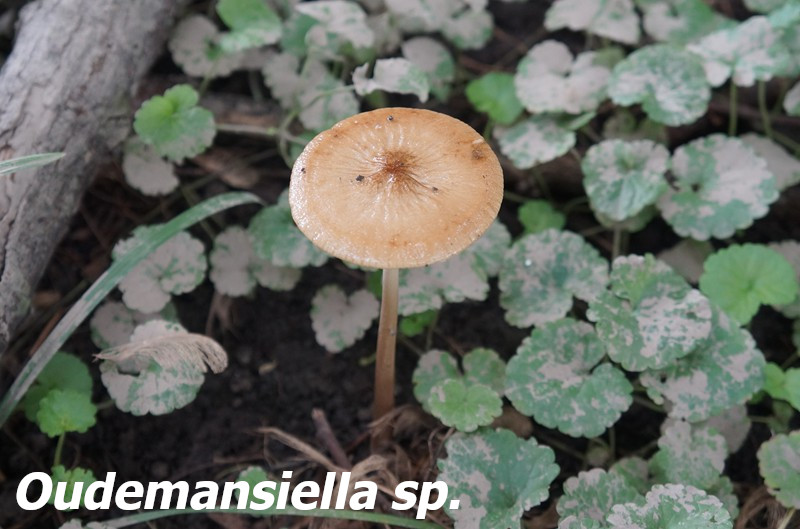
- Common species: O. megalospora, O. radicatae
- Habitat: wood saprobe (usually appears terrestrial)
- Spore Print: white
- Gills: attached (notched), distant
The easiest way to distinguish this very common mushroom is from its relatively long (and very straight!) stem with a tapering taproot. The cap is usually wrinkled and sticky.
In my opinion, there are a lot of confusing things happening with the naming of mushrooms in this genus. Some books call this Xerula, others Hymenopellis, but iNat says the correct name is Oudemansiella.
Russula spp.
- Common species:
Under construction
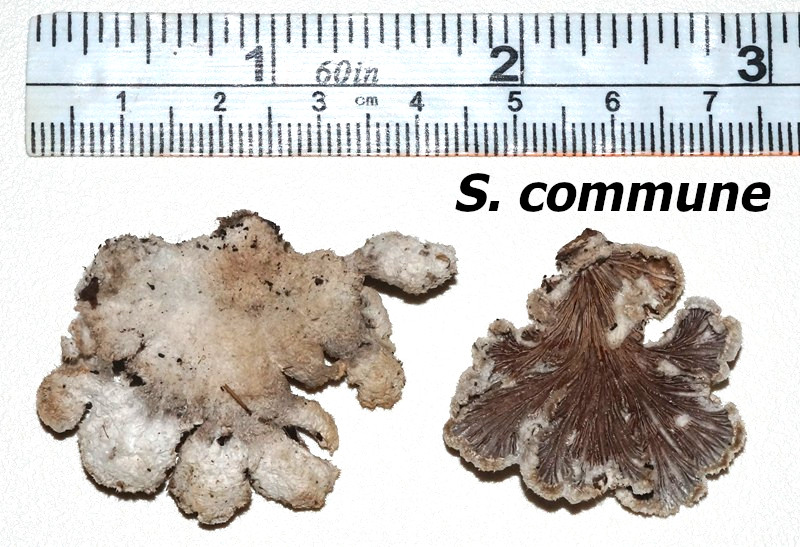
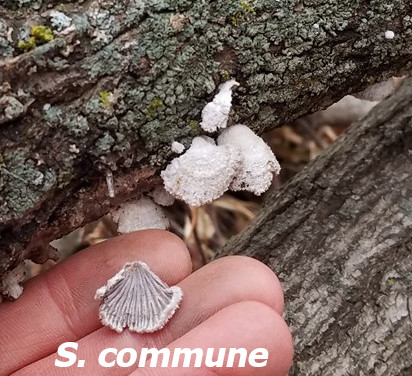
Schizophyllum commune
- Habitat: Saprobe on dead wood (sometimes parasitic)
- Spore Color: White
This is another species from the very small list of mushrooms that you will regularly find during the winter in South Dakota. If you look closely at the gills it will appear that they are split down the center line.
Mushrooms with Gills (colored spores)
Agaricus spp.
Button mushrooms
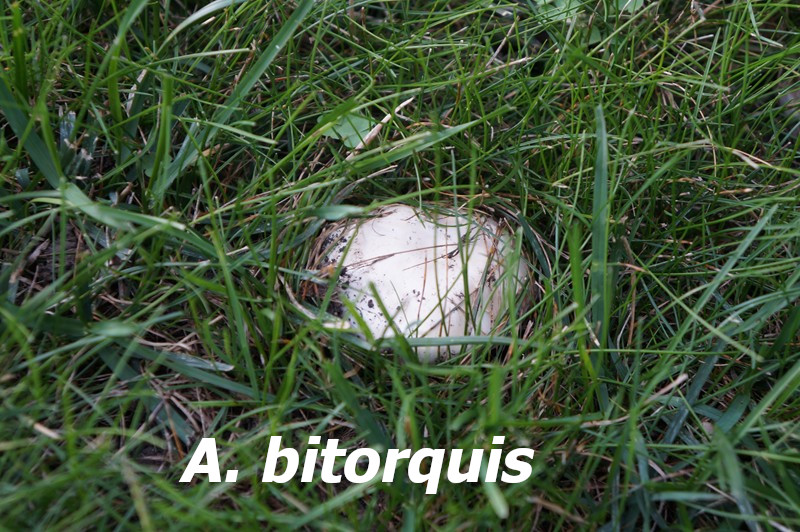
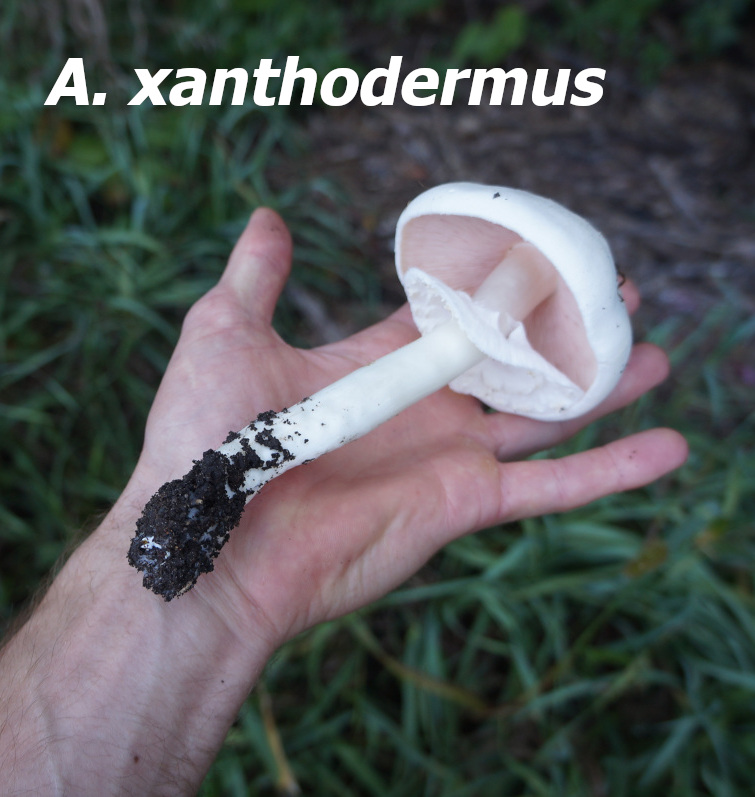
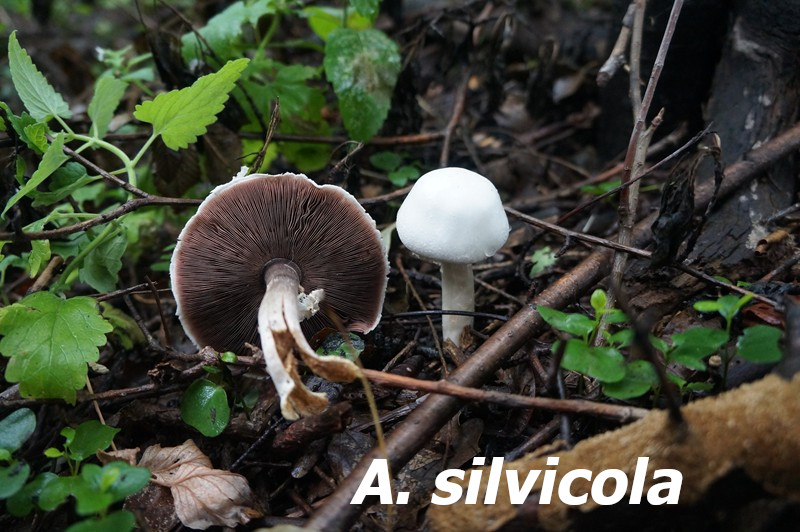
- Common species: A. bitorquis, A. xanthodermus, A. sylvicola, etc
- Habitat: forest & urban, saprophytic on wood
- Season: late summer to early fall
- Spore Print: dark brown
- Gills: entirely free, close or crowded
- Local Look-alikes: Amanita (dif. spore color)
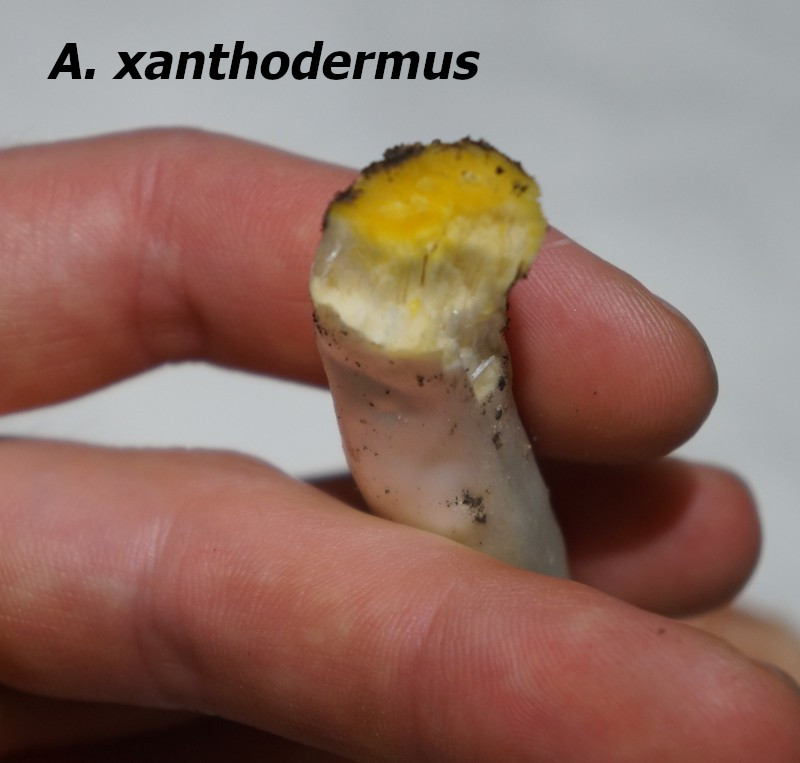
Grocery store “button” mushrooms are usually A. bisporus. Our local wild varieties have many features in common. A. bitorquis is absolutely delicious. A. xanthodermus stains bright yellow when cut, smell like chemicals, and can make you sick. Here in Sioux Falls, SD I mostly find both of those species growing on lawns. Apparently this genus is responsible for causing many illnesses among mushroom hunters.
Agrocybe spp.
Field cap
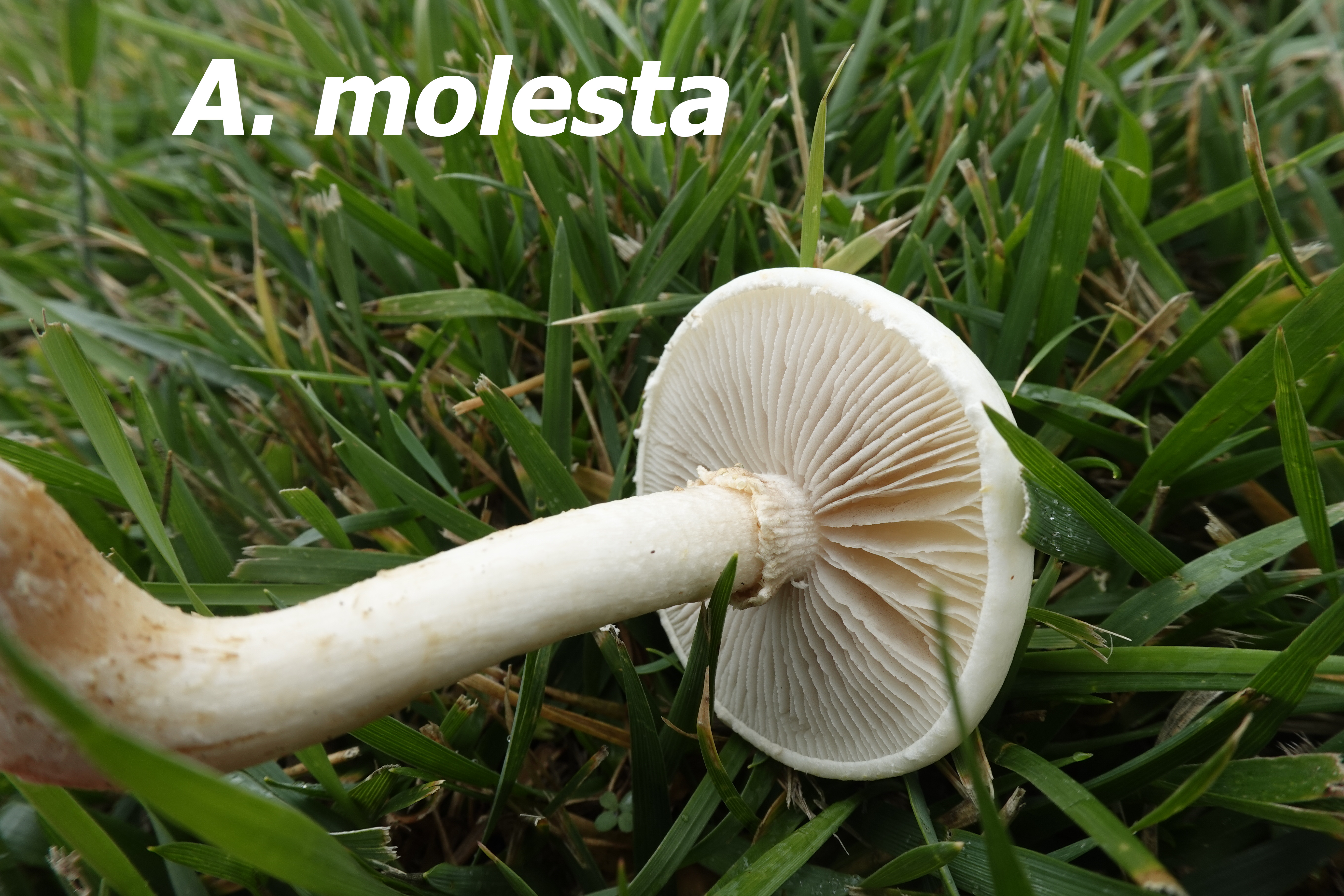
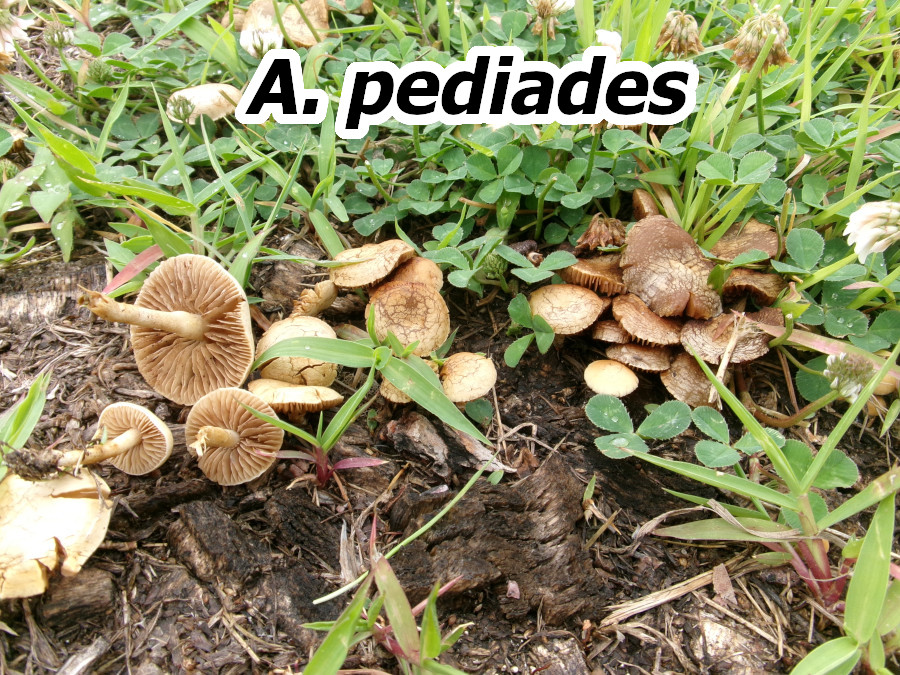
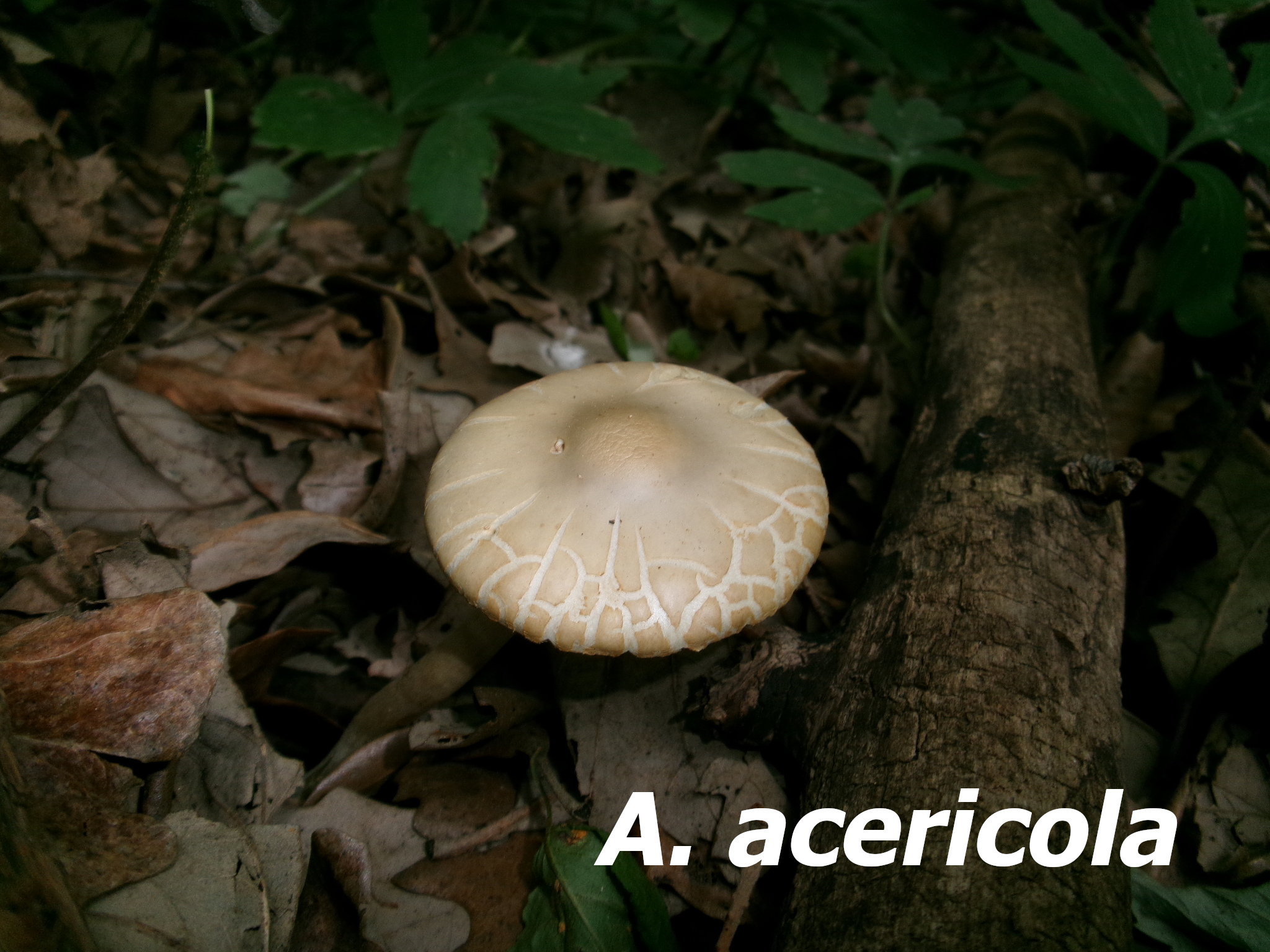
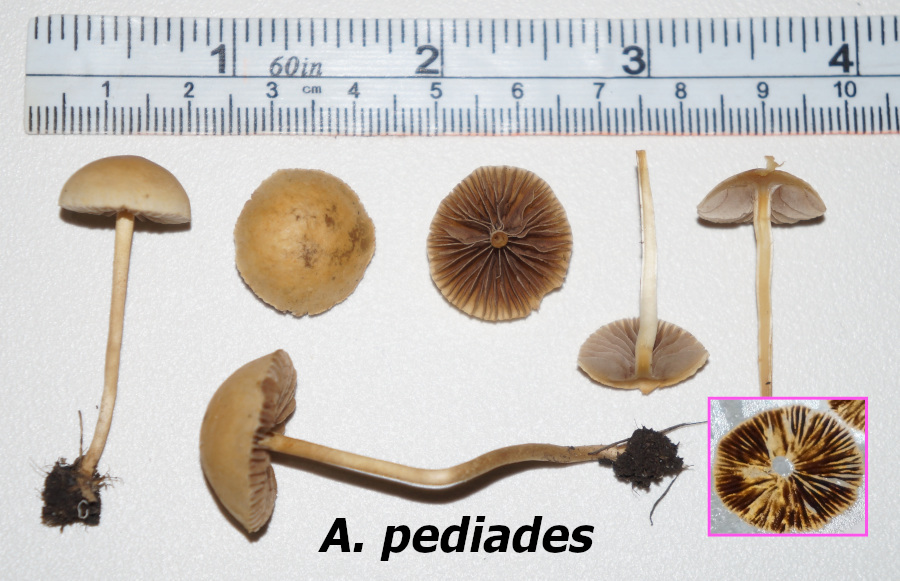
- Common species: A. pediades, A. molesta, A. acericola
- Habitat: saprophytic, terrestrial (or wood)
- Season: summer
- Spore Print: dull cinnamon brown
- Gills: attach, close to nearly distant
- Local Look-alikes: Panaeolus, some inky caps
A great example of LBM’s (little boring mushrooms). These pop up on urban lawns like crazy in the summer. Some species in this genus grow on decaying wood but I mostly find the terrestrial species here in Sioux Falls, SD.
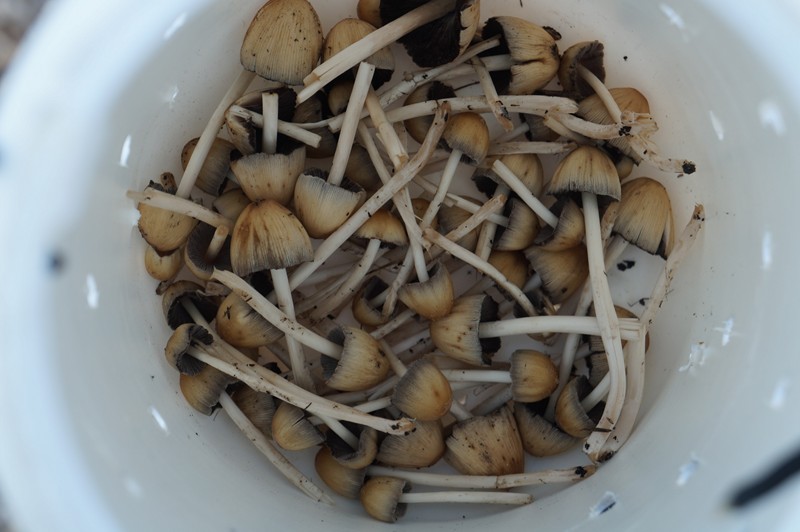
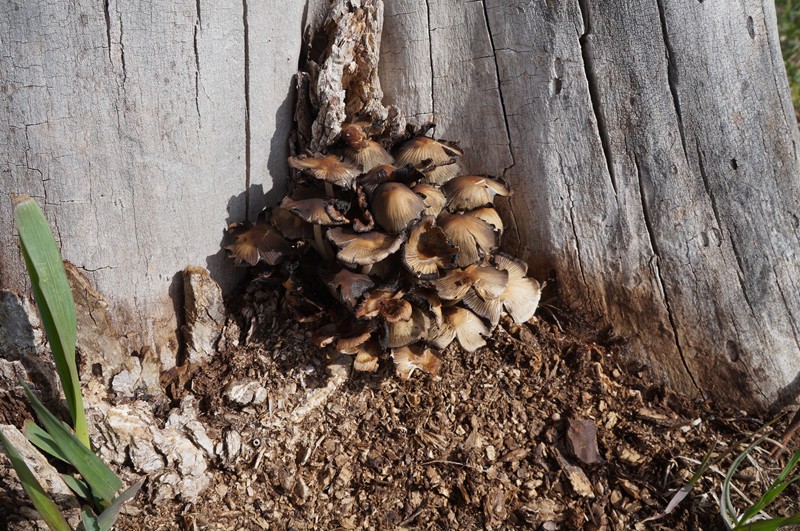
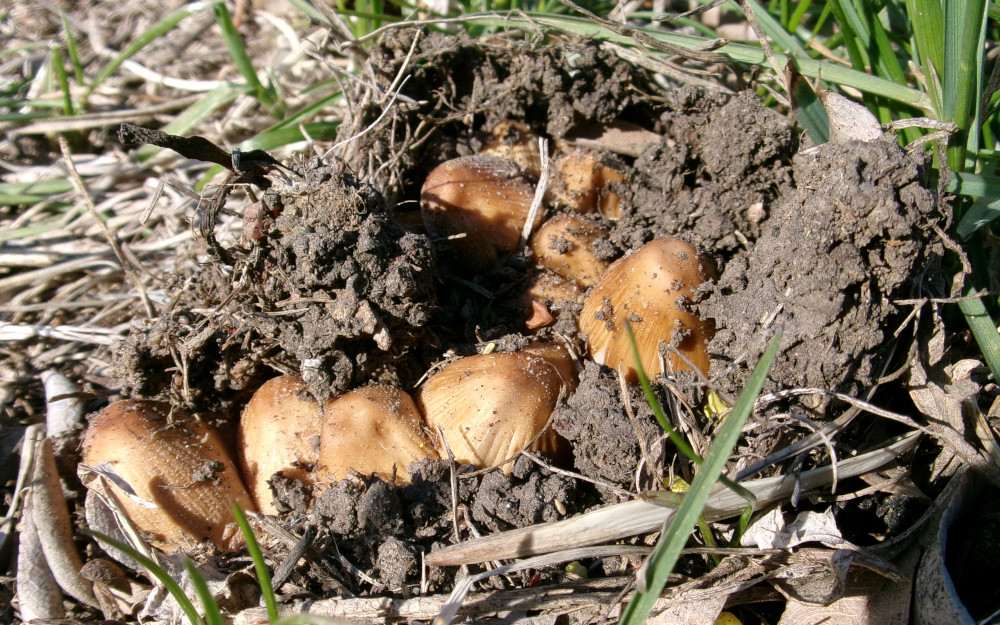
Coprinellus Micaceus
Mica Caps
- Habitat: forest & urban, saprophytic on wood
- Season: early spring to late fall
- Spore Print: blackish
- Gills: attached or free, close or crowded
- Look-alikes: Agrocybe, Panaeolus
This is probably my most frequently found edible mushroom in Sioux Falls and one of the first (and last!) that pops up each year. Every time it rains I walk the block and pick these where all the ash trees were cut down due to the ash bore. If you find them growing terrestrially they are actually growing from buried wood and roots. In the forest they are found at the base of trees and stumps. I will be the first to admit that they taste quite bland but they work well in fried pickled beet sandwiches, stir-fries, and any dish that needs a mushroom. Do NOT consume with alcohol or it will make you sick.
Crepidotus spp.
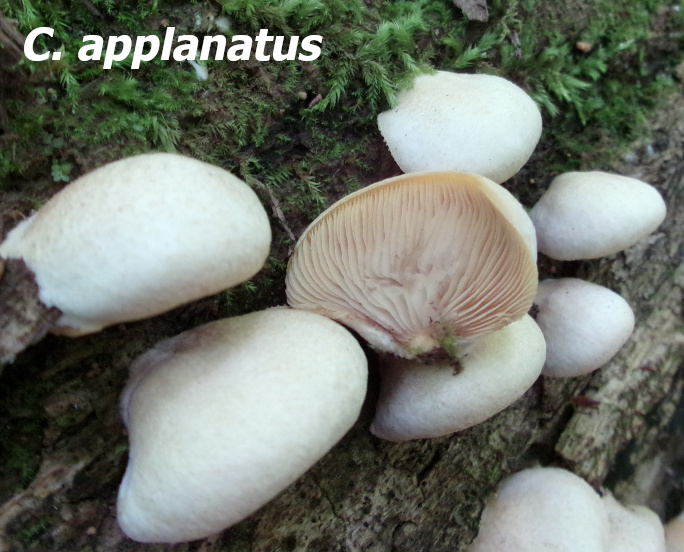
Oysterlings
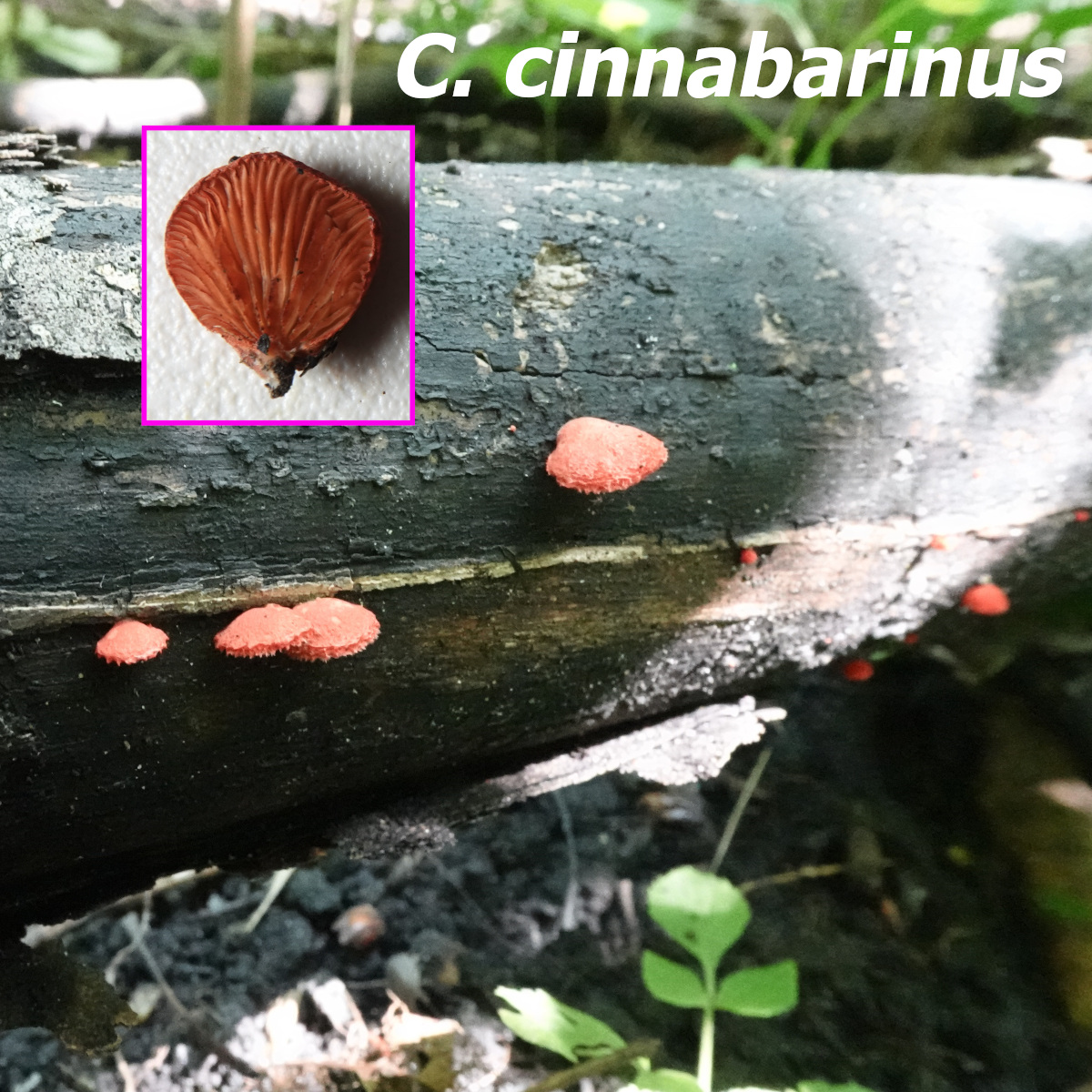
- Common Species: C. applanatus, C. cinnabarinus
- Habitat: saprophytic on wood
- Season: summer and fall
- Spore Print: brown
- Gills: whitish to brown
C. applanatus is frequently found growing from partially decayed logs in deciduous forests. The brownish gills and lack of a stem make this a relatively simple mushroom to ID.
C. cinnabarinus is currently being researched for the possibility of being parasitic on other Crepidotus species.
Galerina Spp.
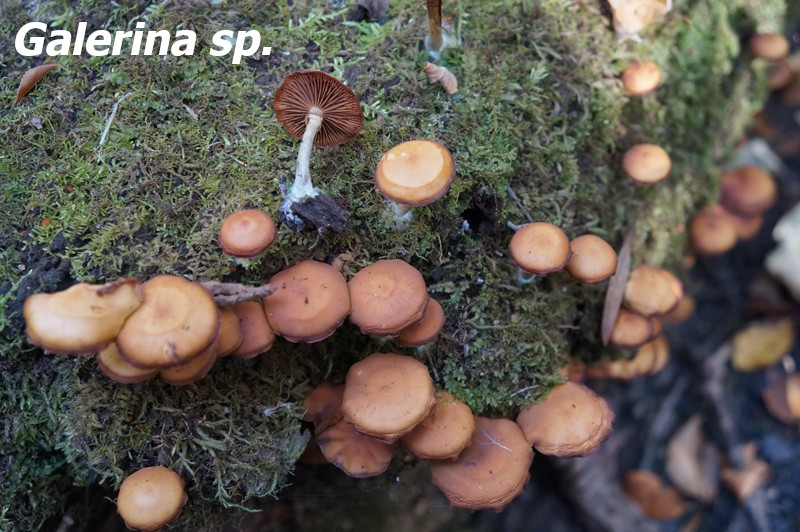
Deadly Galerina
- Habitat: saprophytic on wood
- Season: spring and fall
- Spore Print: rust colored
- Common look-alikes: Simocybe, Gymnopilus, Bolbitius
I’ve been told that the genus Galerina needs a lot of work done so if you are a budding mycologist have at it! Identifying these mushrooms to species level is very difficult so I personally assume every Galerina sp. that I find is deadly poisonous because some species contain amatoxins… which will kill you! Know this mushroom if you plan to forage any wood-loving fungi.
Inocybe spp.
Fiber Caps
- Look-alikes:
Under construction
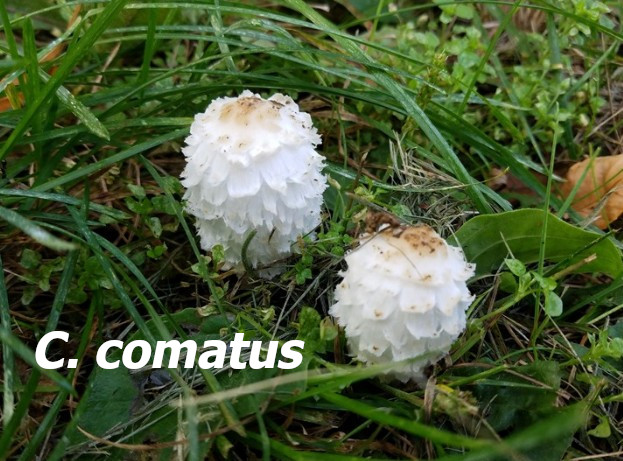
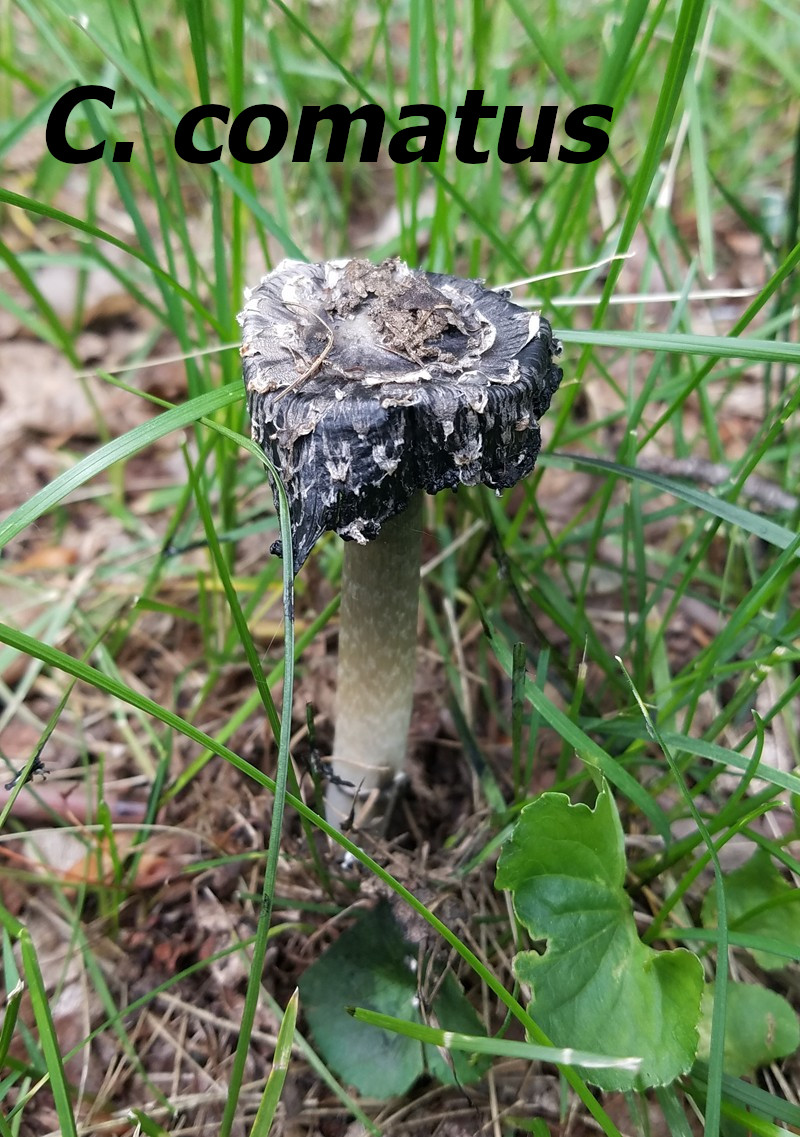
Large Inky Caps
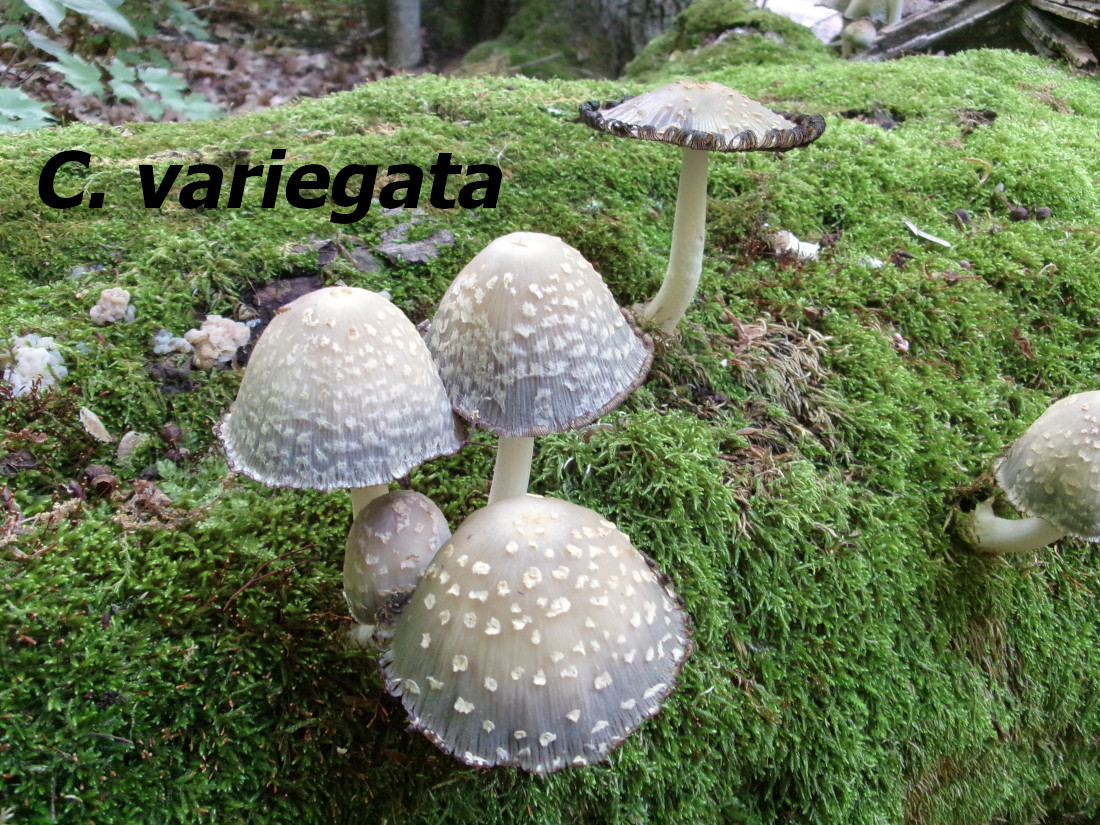
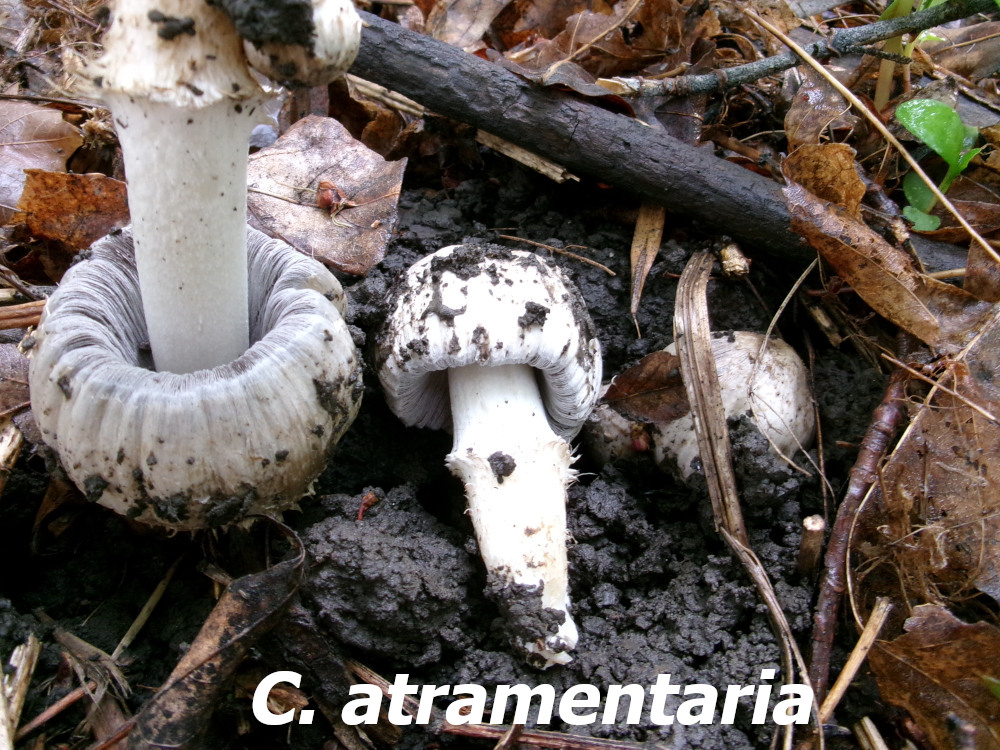
- Common Species: Coprinus comatus, Coprinopsis variegata, Coprinopsis atramentaria
- Habitat: forest & urban, saprophytic
- Season: early spring to late fall
- Spore Print: blackish
Quickly after these mushrooms fruit they look like they are rotting due to black slime taking over the caps. This is called “deliquescing” and is a form of spore dispersal. All inky cap species listed here contain coprine and can not be consumed with alcohol or you will get very sick!
Quoted from a mycologist on Facebook: “These [C. variegata] should be avoided for consumption as they contain coprine and benzocoprine and can make you very sick when consumed with alcohol. These have also been shown to cause bone marrow depression and testicular lesions in K9’s in controlled circumstances.” I asked for a source but was not given one. Will research later…
C. comatus: Shaggy mane grows on lawns mostly in spring and early fall. Highly sought after by seasoned mushroom foragers.
Coprinopsis variegata & atramentaria: both grow on decaying wood. See -> Video
Small Inky Caps
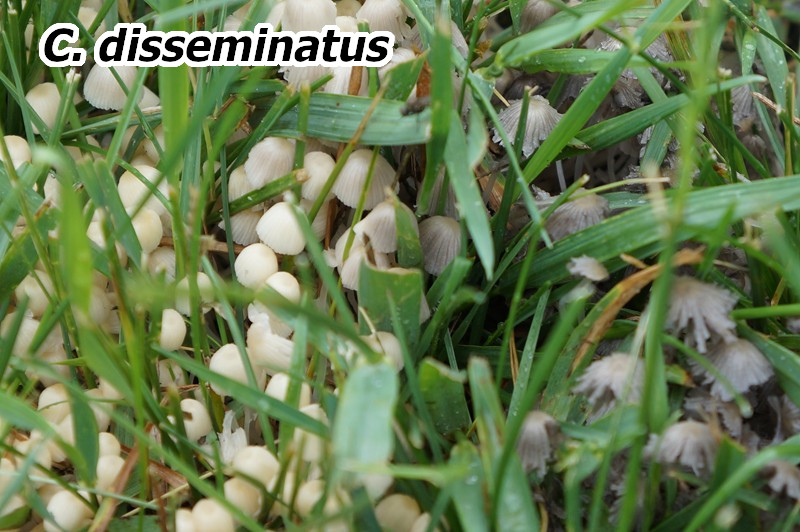
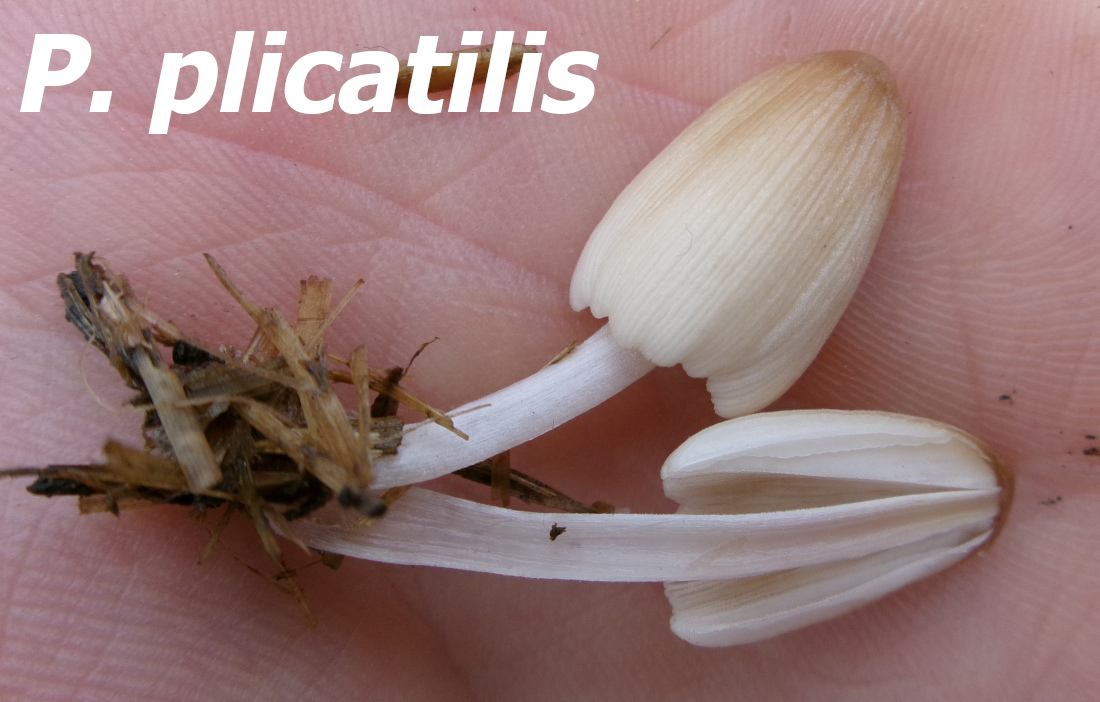
- Common Species: Coprinellus disseminatus, Parasola plicatilis,
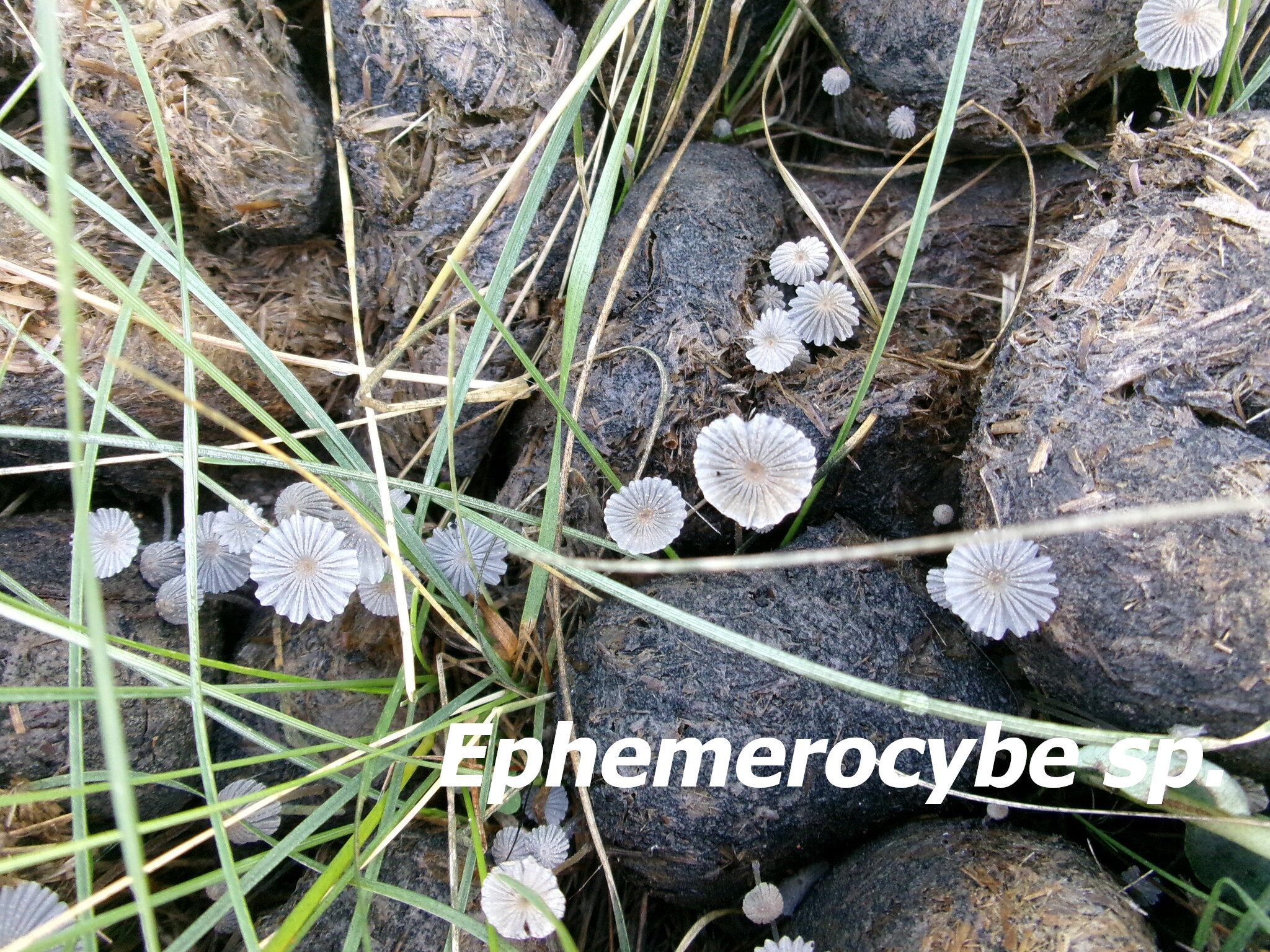
TulosesusEphemerocybe sp., Narcissea sp. - Habitat: forest & urban, saprophytic
- Season: early spring to late fall
- Spore Print: blackish
These mushrooms all share the following characteristics: tiny, fragile, and tattered edges as the mushrooms deliquesce. They can be quite tough to distinguish from each other.
Coprinellus disseminatus: frequently found growing in groups of well over 100 caps!
Coprinopsis lagopus: different from P. plicatilis because of patches of velar remnantsTulosesus Ephemerocybe sp.: loves horse dung
Parasola plicatilis: frequently found growing on urban lawns
Panaeolus spp.
Mottlegill
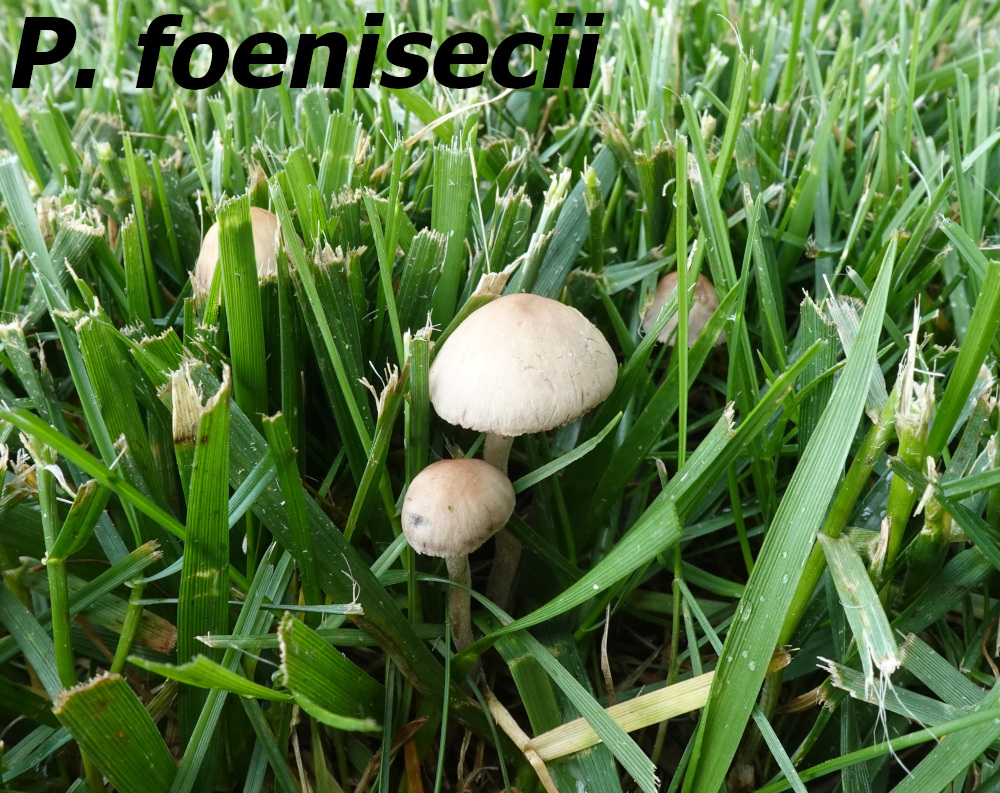
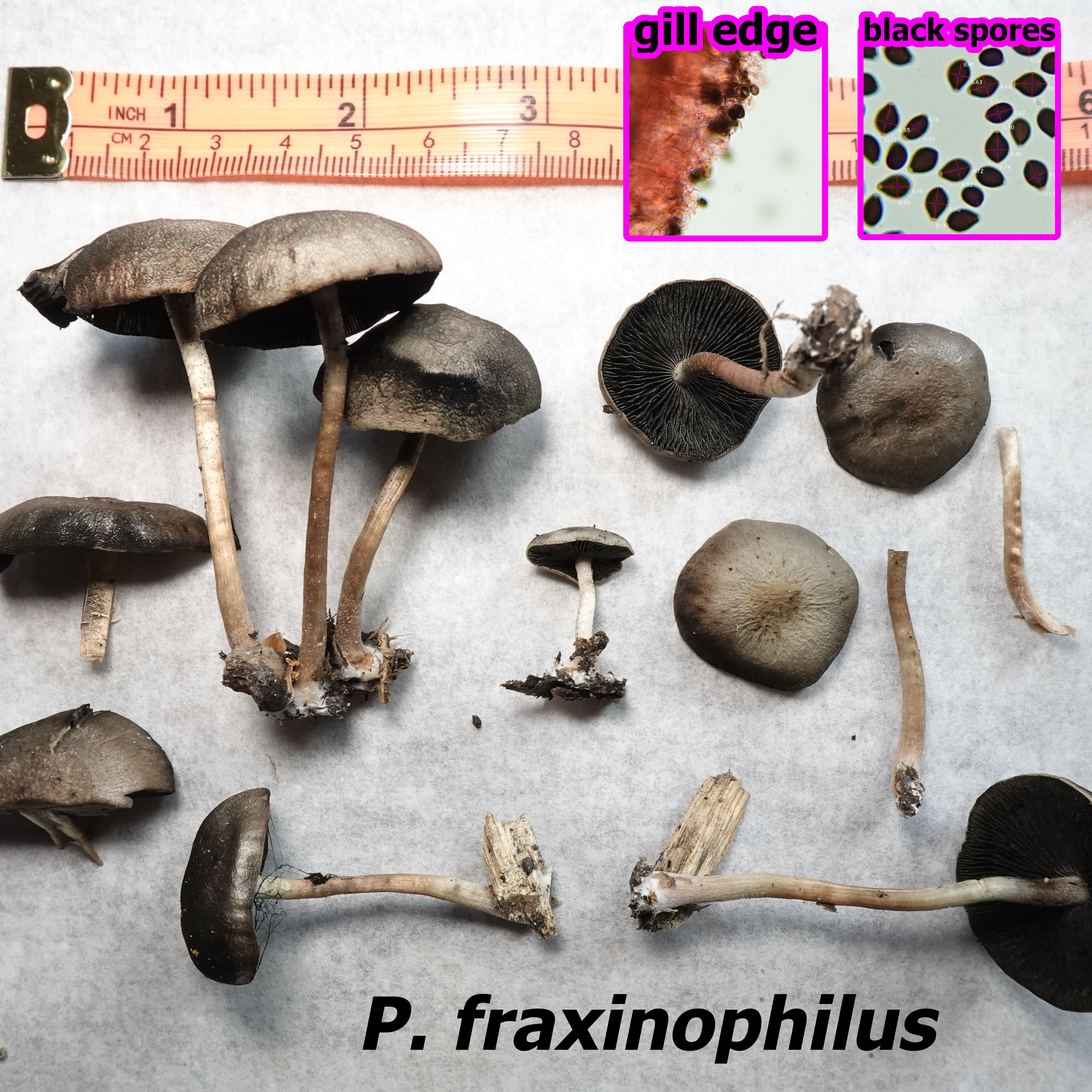
- Common Local Species: P. foenisecii, P. cintulus, P. fraxinophilus
- Habitat: saprophytic on lawns & sod
- Season: summer
- Spore Print: brown to black
- Common Look-alikes: Conocybe, Bolbitius, Agrocybe
P. foenisecii is an incredibly common urban mushroom that can be found on pretty much any lawn during the rainy season of summer.
P. cinctulus contains the mycotoxin psilocybin and can be harmful to young kids/dogs if eaten while playing outside in the yard.
P. fraxinophilus is definitely not a common mushroom but Logan recently found 1 of the 14 total world observations on iNat and had it DNA sequenced by Scott Ostuni. Super stoked to find such a rare mushroom! (Although, I must admit, I walked right past it and only found it because my niece called it out!)
Pluteus spp.
Deer mushroom
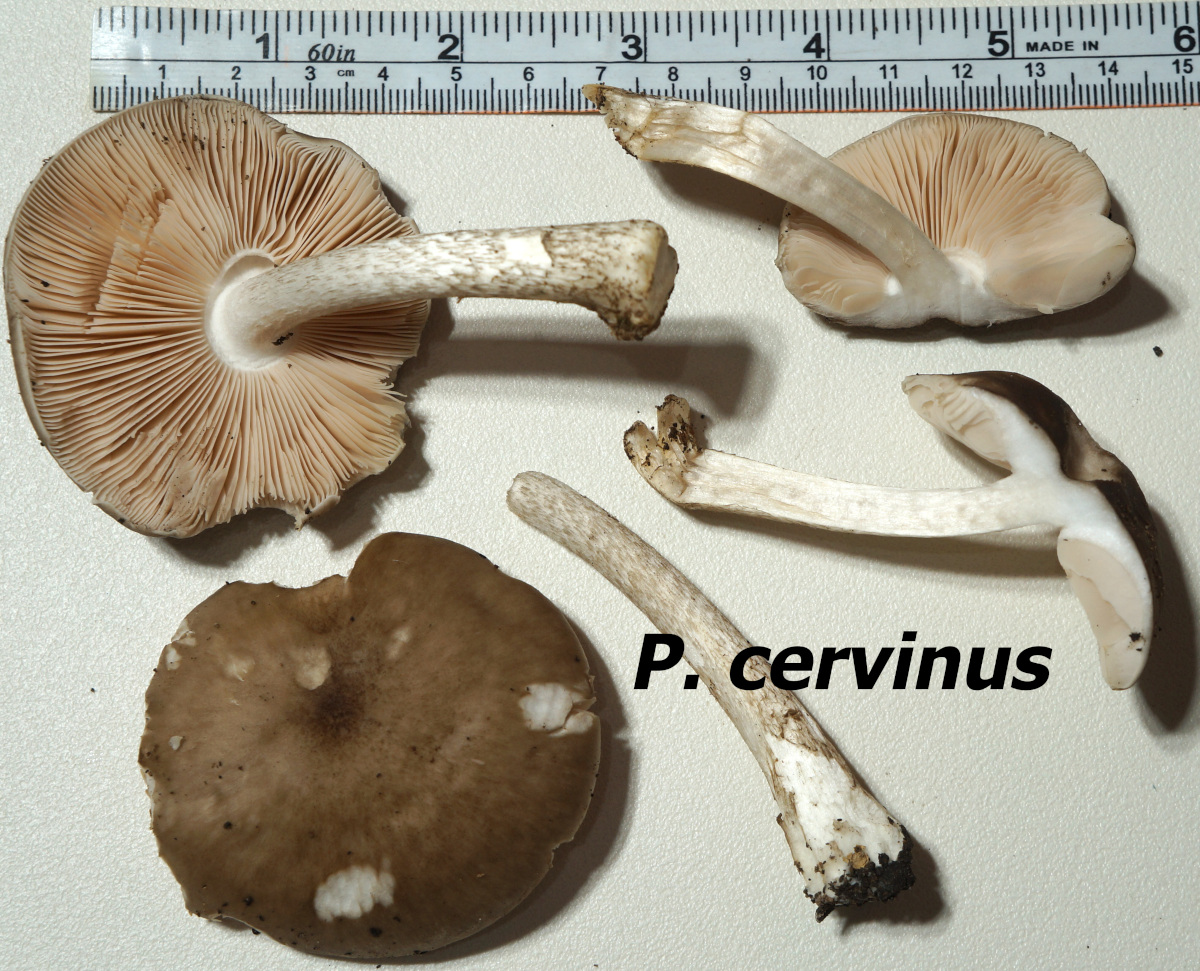
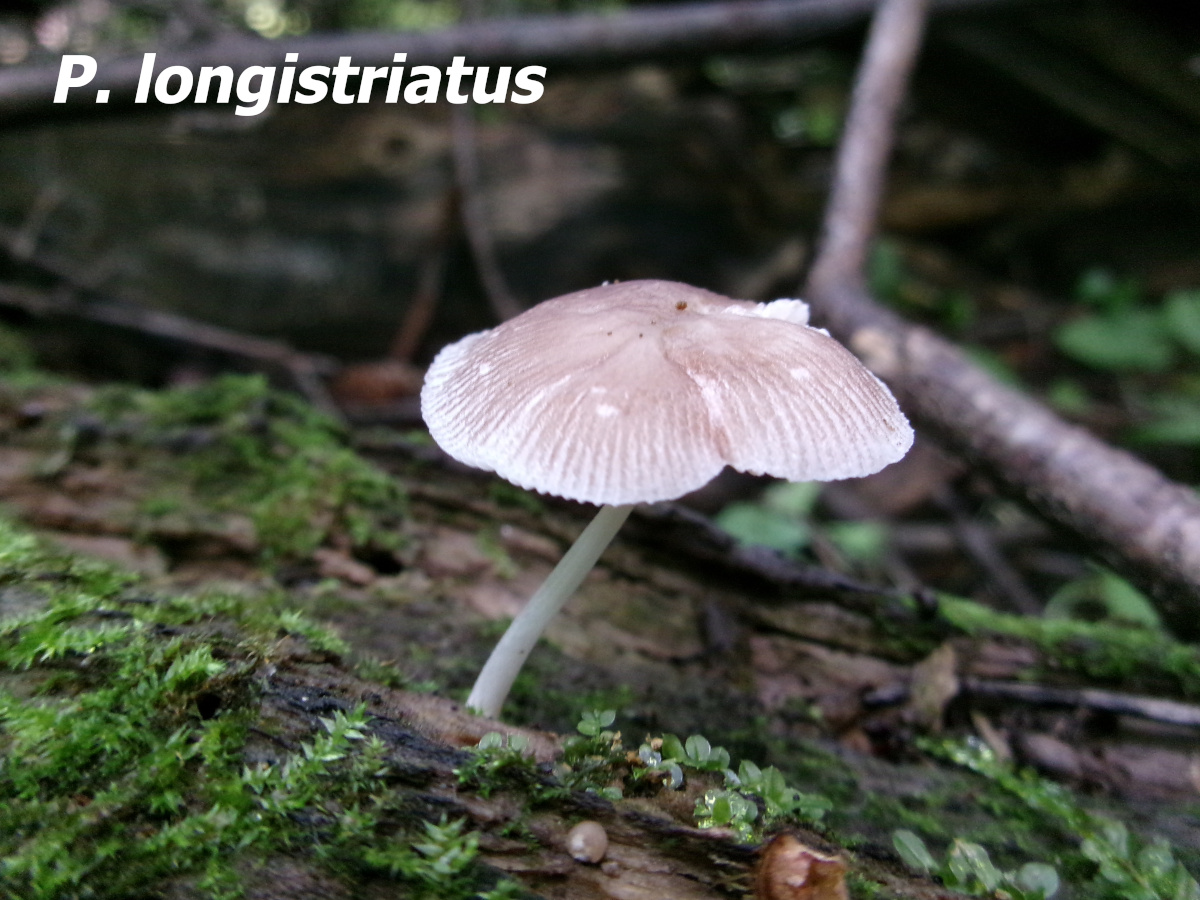
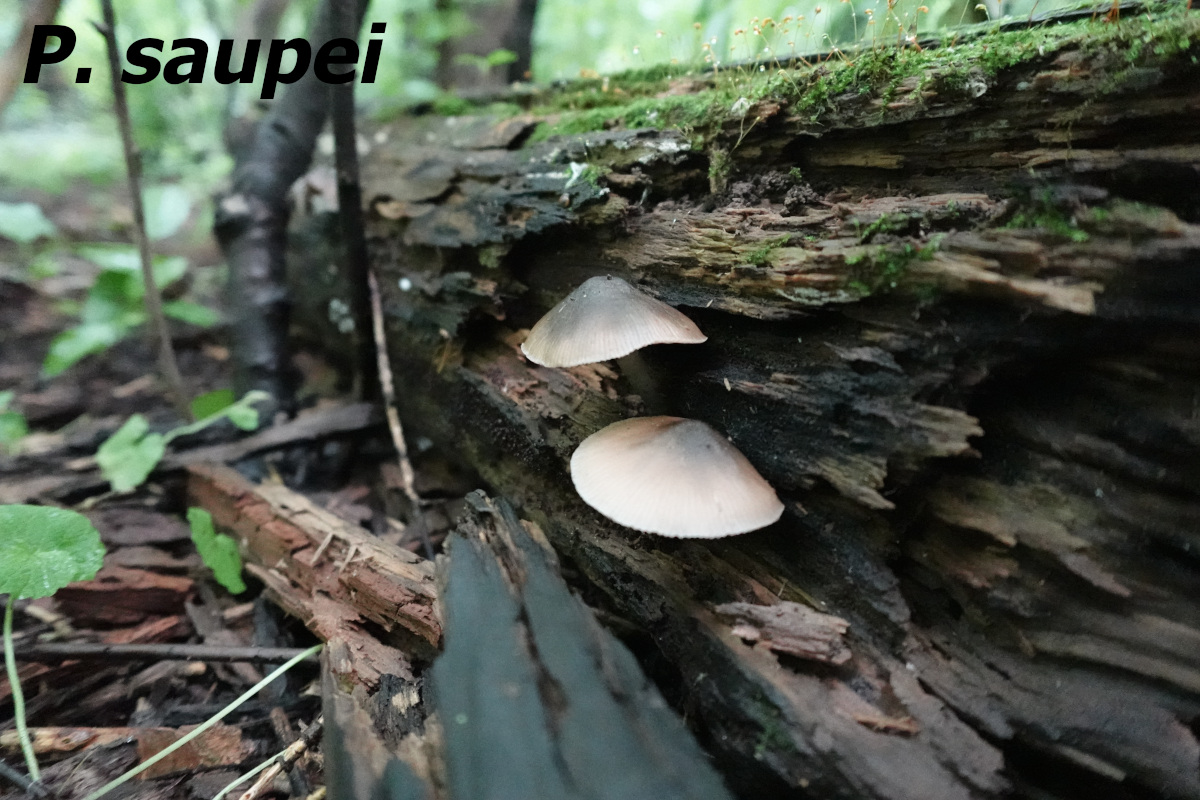
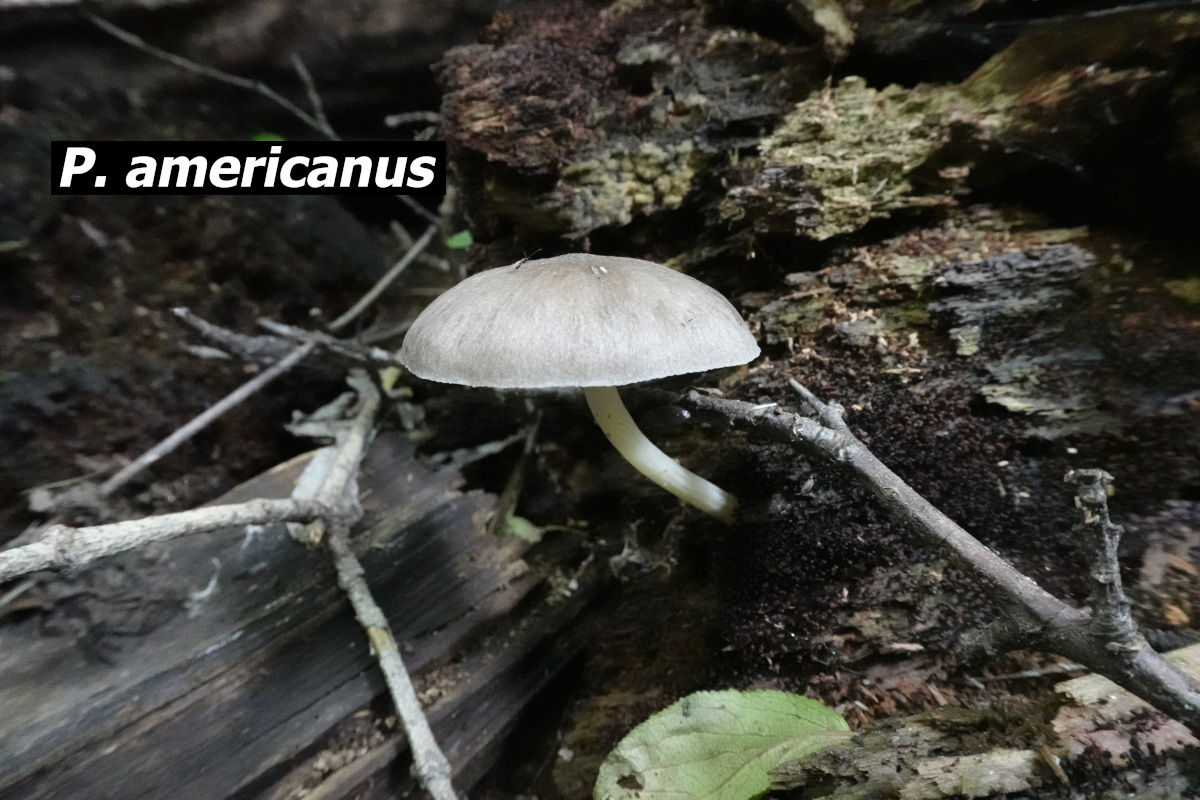
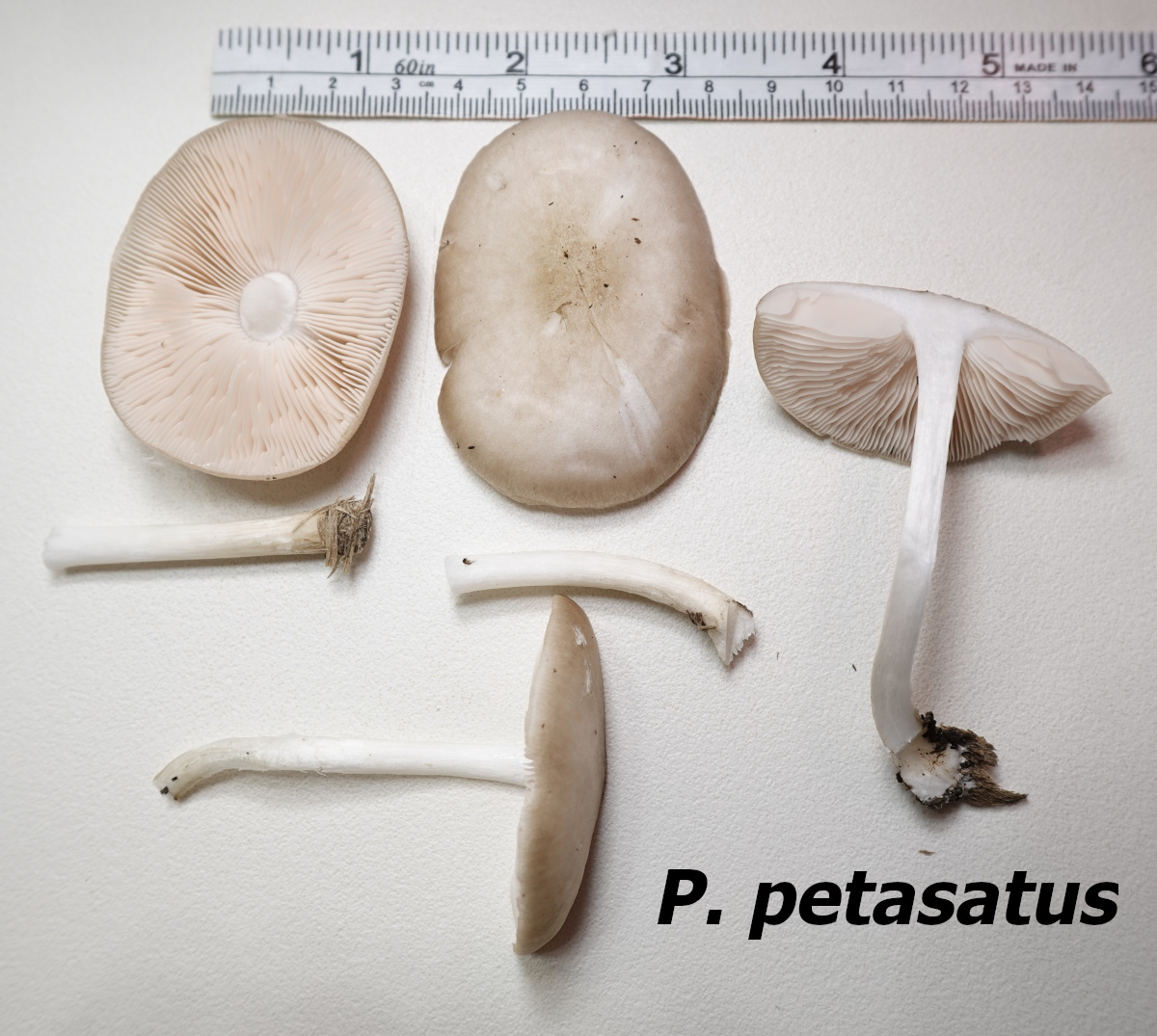
- Common species: P. cervinus, P. longistriatus, P. americanus, P. petasatus, P. seticeps, P. saupei
- Habitat: saprophite on decaying wood
- Season: early spring to late fall or summer
- Spore Print: pink (may look brown)
- Gills: entirely free, crowded
- Look-alikes: Volvariella
Pluteus are among the most frequently found mushrooms growing from decaying logs here in Eastern South Dakota. There are many species, some of which are edible while others are considered poisonous due to the mycotoxin psilocybin. In 2025 Logan Spader decided to take on the task of microscopically IDing our many local species, sharing the work online, and sending off samples for DNA sequencing. You can see his work here:
P. cervinus grows mostly in spring and fall. Edible.
P. americanus and P. saupei both look nearly identical to P. cervinus but can be easily distinguished with microscopy (and smell).
P. longistriatus generally have a much longer/slender stem and smaller cap than P. cervinus
P. seticeps are relatively small and currently being compared with other small Pluteus.
Mushrooms with Pores
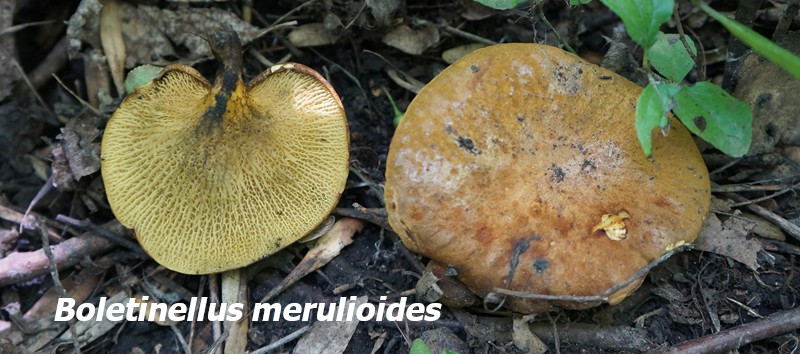
Boletinellus merulioides
Ash Bolete
- Habitat: near ash trees (read more!)
- Pore surface: yellow, many cross veins
- Spore color: olive brown
This is one of the few terrestrial mushrooms with a cap and pores that I frequently find in South Eastern South Dakota. During peak season you can harvest these by the bucket-load for eating. I once found one hiding under my neighbor’s deck that was much larger than my hand!
Large Shelf Mushrooms
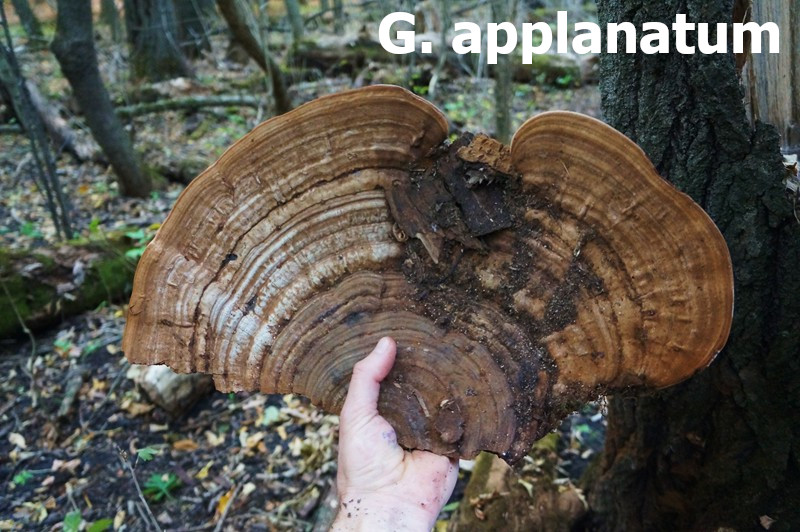
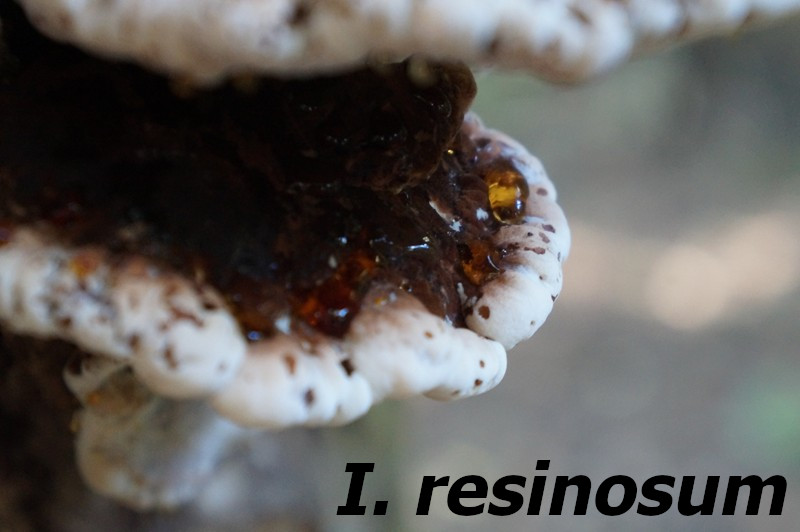
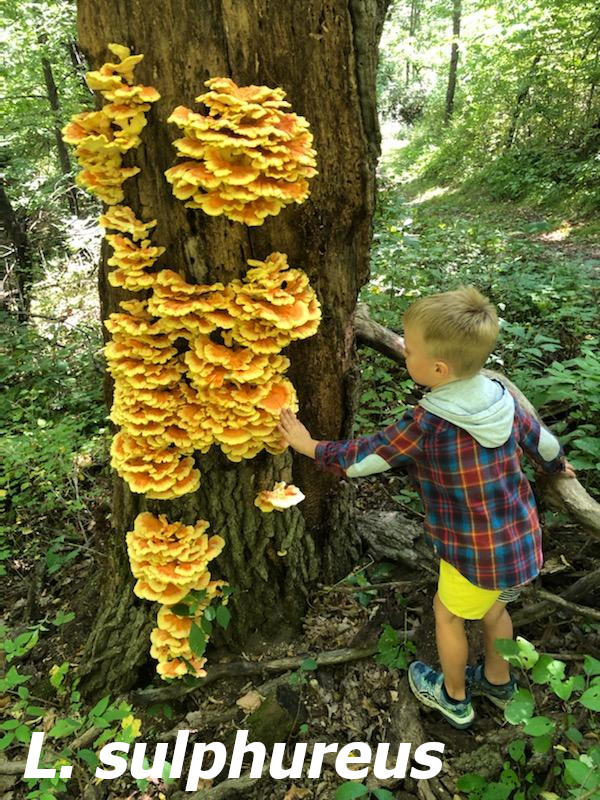
- Common species: Ganoderma applanatum, Cerioporus squamosus, Ischnoderma resinosum, Laetiporus sulphureus, Fuscoporia gilva, etc.
- Habitat: forest, saprophytic or parasitic
- Spore color: varies
G. applanatum, commonly known as the artist’s conk, is one of the few mushrooms that are easy to find in the winter (it is a perennial). That is why all mushroom hunters in the Upper Midwest should be able to ID it!
L. sulphureus, or chicken of the woods, is one of my favorite edible mushrooms and the bright orange/yellow colors make it easy to find when they are in season.
Cerioporus squamosus is possibly the biggest mushroom that grows in South Dakota. I have found specimens large enough for my children to use as a bed. Many mushroom hunters, myself included, eat this species.
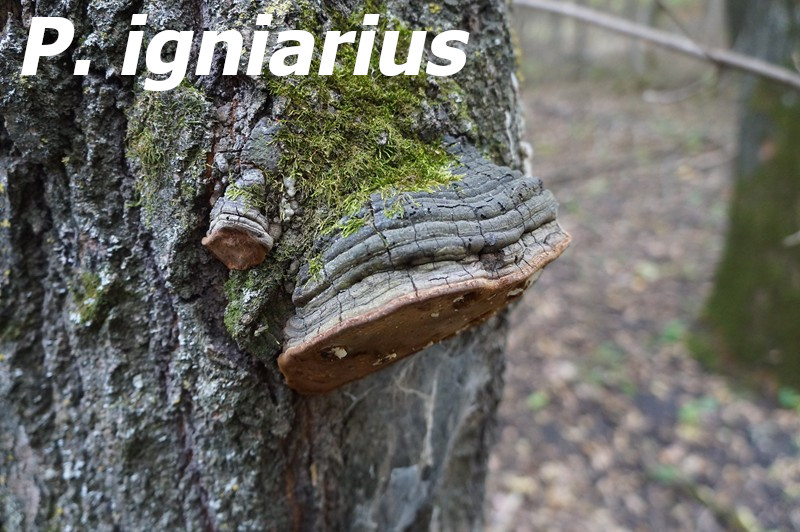
Phellinus igniarius has some studied medicinal uses including protecting the liver from alcohol damage, helping diabetics regulate blood sugars, and amplifies the effect of nicotine. (source = ultimate-mushroom.com, not the best reference but I hope to look into this further!)
Fuscoporia gilva; I have found this many times but can never remember the name. Writing here for future reference. P. schweinitzii is fuzzier and grows on conifer wood.
Mushrooms with Maze-shaped Pores
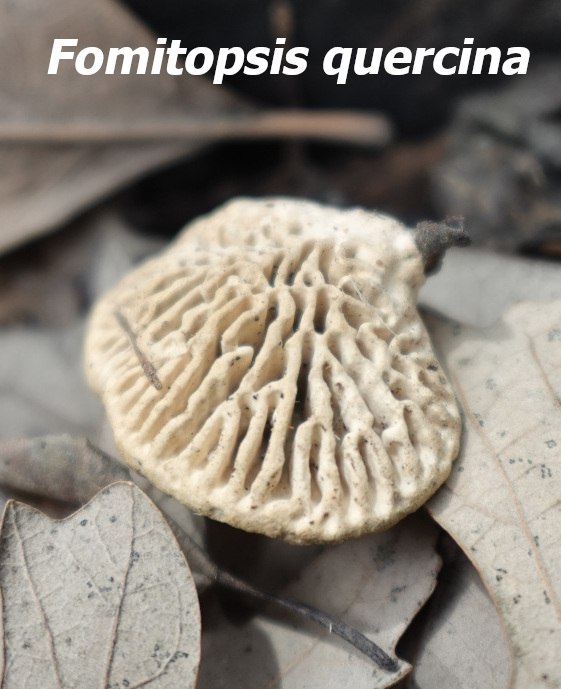
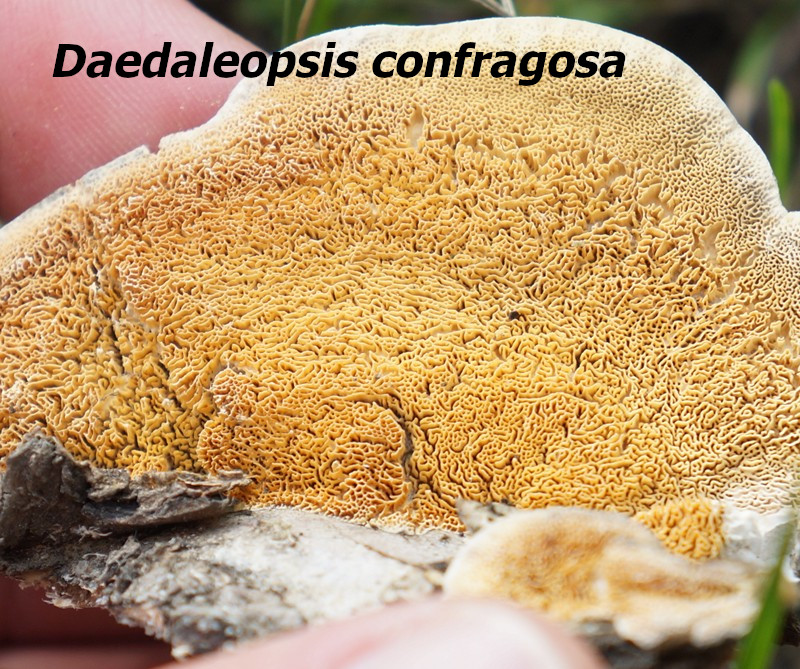
- Common species: Fomitopsis quercina (Daedalea), Daedaleopsis confragosa
- Spore color: white
- Look-alikes: Gloeophyllum sepiarium
With any good field guide the uniquely shaped gills should make identification relatively straight forward.
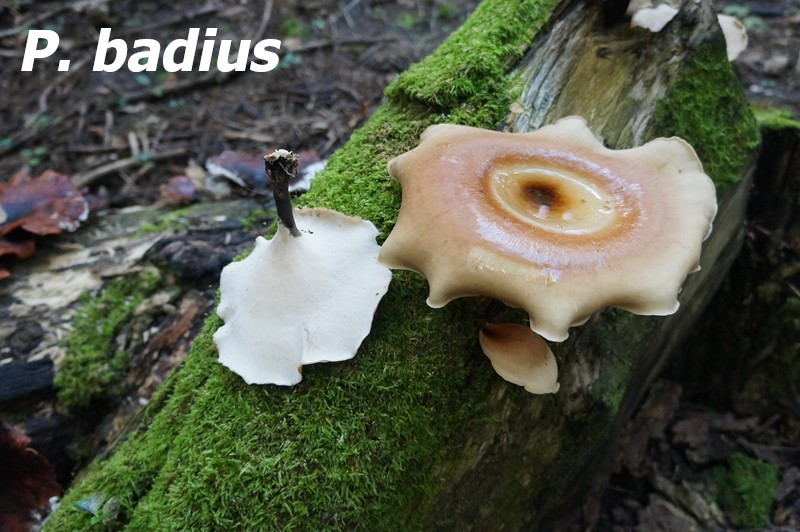
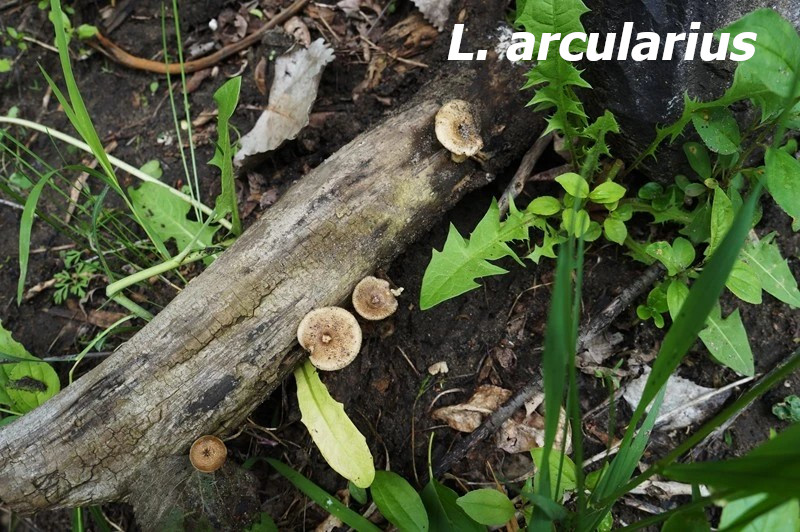
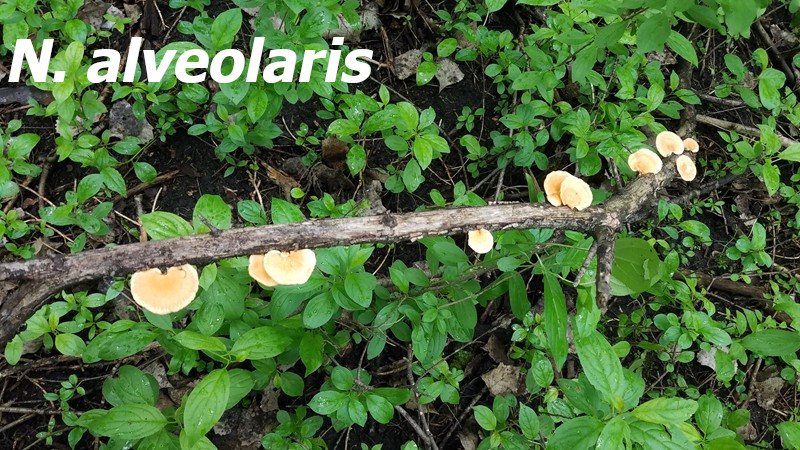
Polypores (common name)
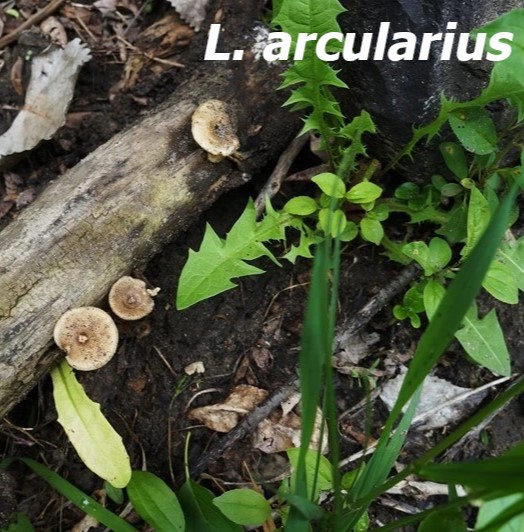
- Common species: Cerioporus squamosus, Neofavolus alveolaris (P. mori), Lentinus arcularius, Picipes badius…
- Habitat: forest, saprophytic or parasitic
- Spore color: white
I don’t know what all these crazy mycologists are trying to do to the genus Polyporus, but I remember ALL of the mushrooms in this list sharing the same genus name. Now? They are all different…
Cerioporus squamosus is possibly the biggest mushroom that grows in South Dakota. I have found specimens large enough for my children to use as a bed. Many mushroom hunters, myself included, eat this species.
Mushrooms with Teeth
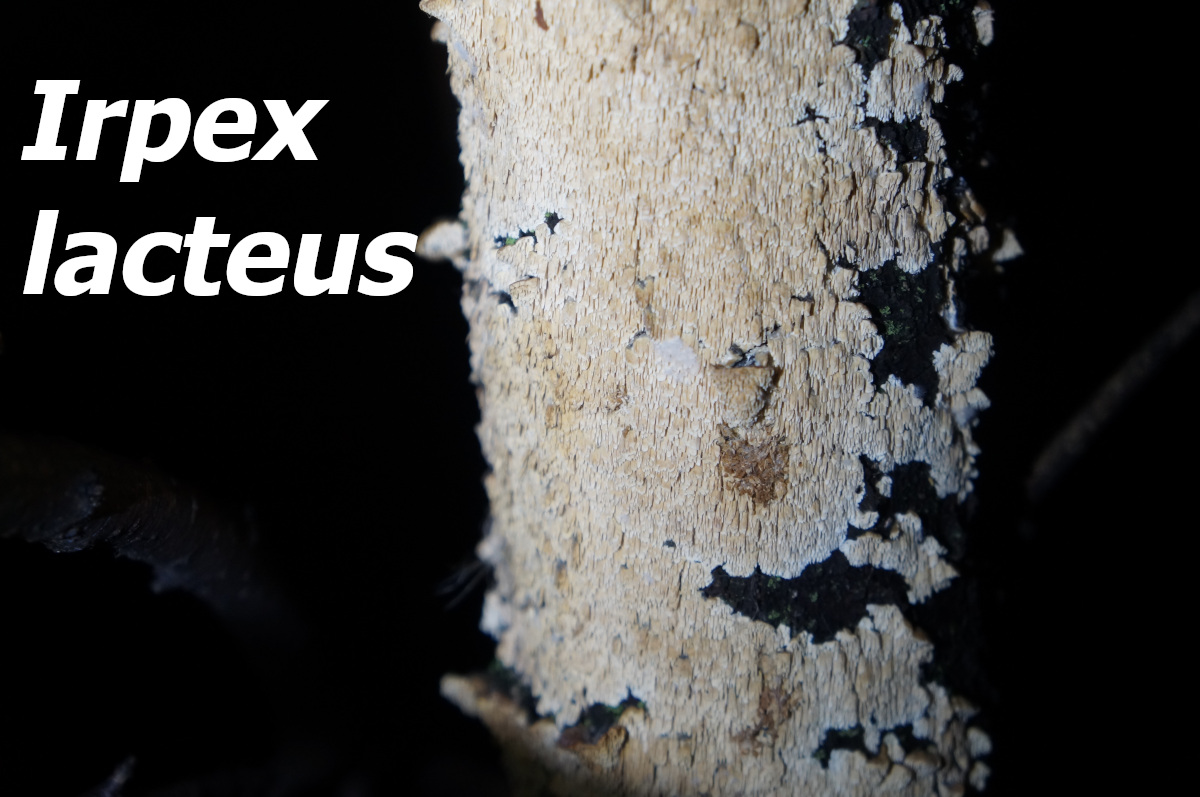
Irpex lacteus
Milk-White Toothed Polypore
- Habitat: Saprobe on fallen branches and hardwood logs
- Spore color: white
This VERY common mushroom is found year-round by mushroom hunters of the Upper Midwest. Although Michael Kuo at MushroomExpert.com calls the spore surface “pores” I think they look more like teeth and even the common name uses the word “Toothed”. Sometimes these grow small shelves but more often they lay flat against their chosen substrate.
Other Mushrooms
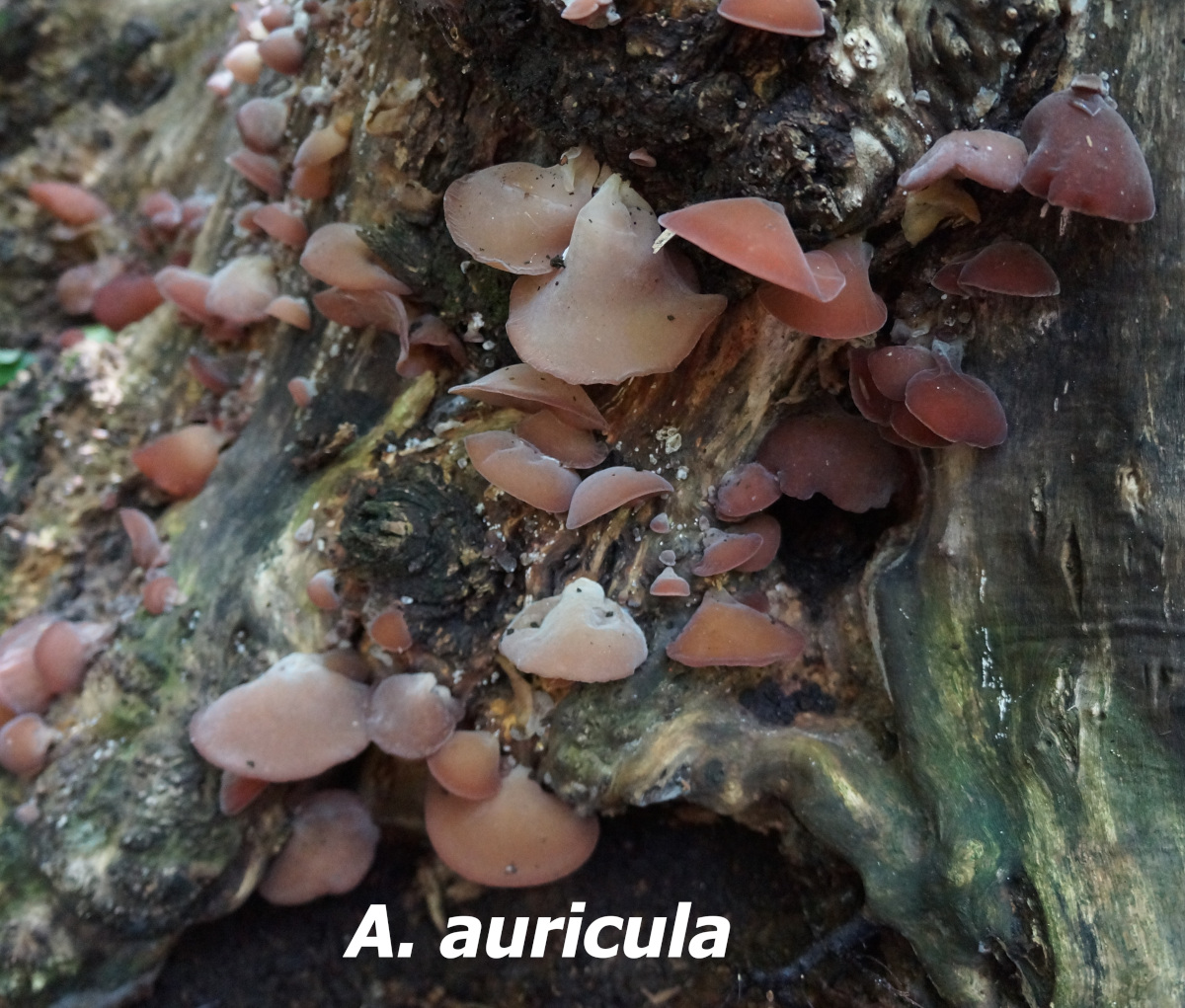
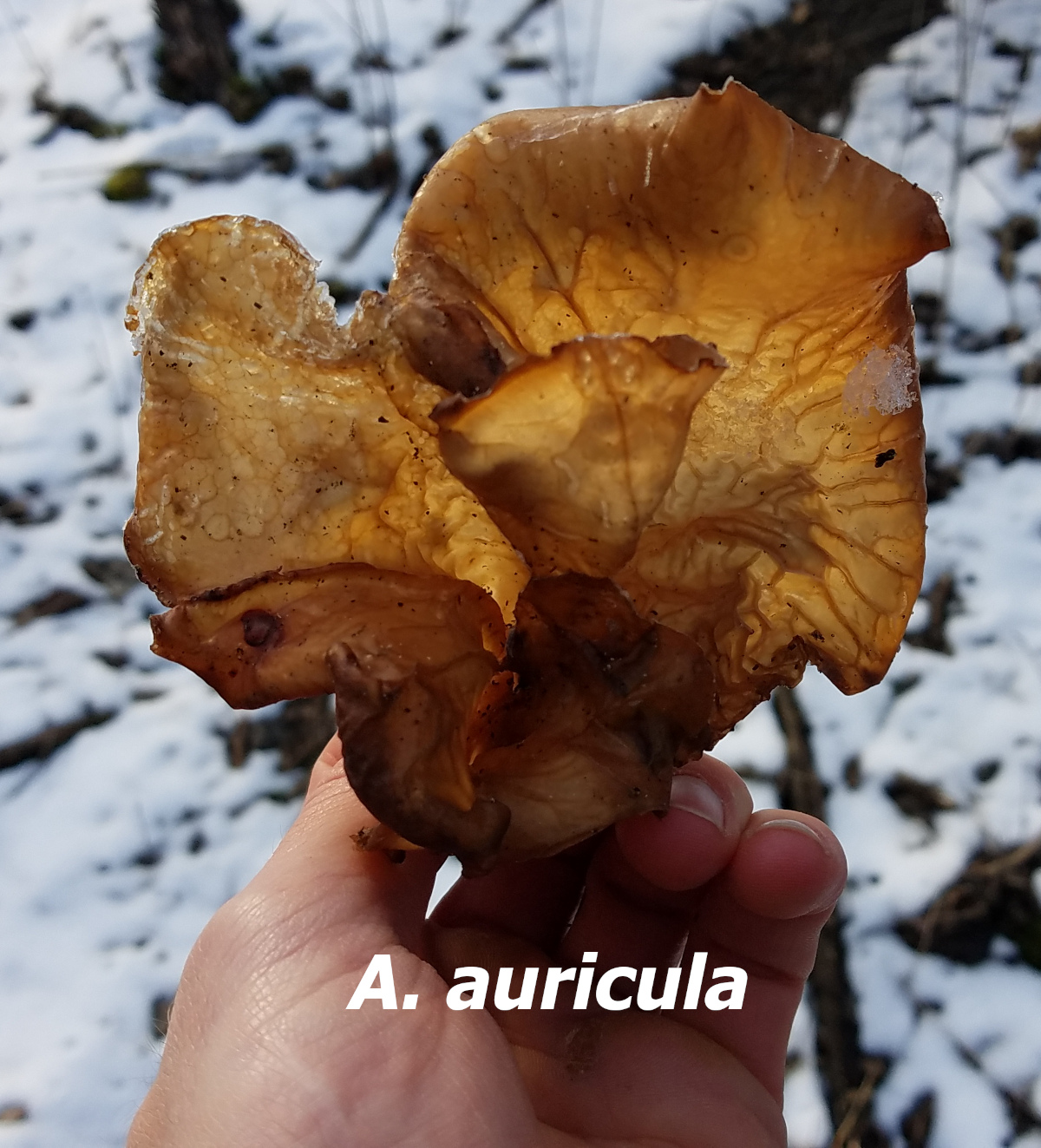
Auricularia auricula
Wood Ear Mushroom
- Habitat: Saprobe on decaying logs
- Look-alikes: Pachyella clypeata, Dacryopinax elegans, Tremella foliacea
This is one of the few fleshy mushrooms that can be found within a day of frozen temps. I have a theory that it dehydrates in warm temps, freezes, then rehydrates when the temps get warm which makes it appear like it grew in freezing temps. JUST A THEORY! This mushroom is edible with a distinct texture and is fun to add to Asian-type recipes.
Coral Shaped Mushrooms
- Common genera:
Add
Cup Shaped Mushrooms
- Common genera:
Add
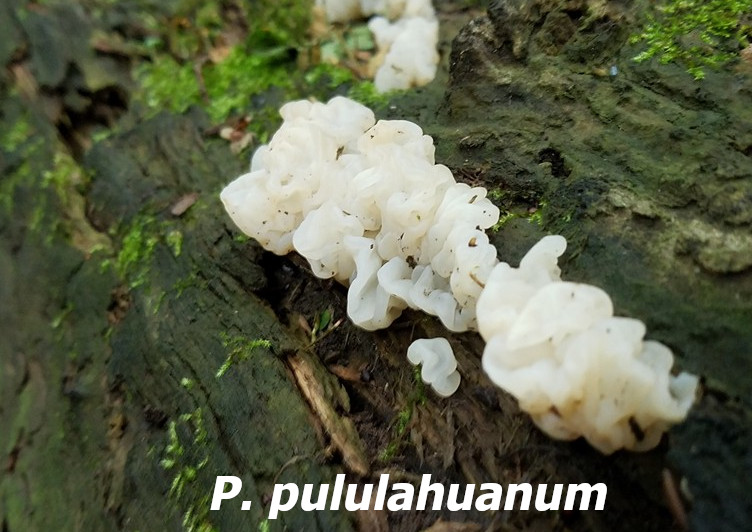
Protohydnum pululahuanum
- Common genera:
DuctiferaP. pululahuanum - Habitat: Saprobe on decaying logs.
- Common look-alikes: Sebacina sparassoidea (same texture, but more spiky)
These crazy mycologists gotta be mucking up my favorite mushroom names! Ductifera pululahuana used to be my favorite name to say out loud. Apparently recent DNA sequencing has moved this to a new genus. Known commonly as the Jelly Fungus.
Gymnosporangium juniperi-virginianae
- Common genera:
Add
Lichens
- Common genera:
Add
Morchella sp.
- Common genera:
Add
Spherical Shaped Mushrooms
- Common genera:
Add
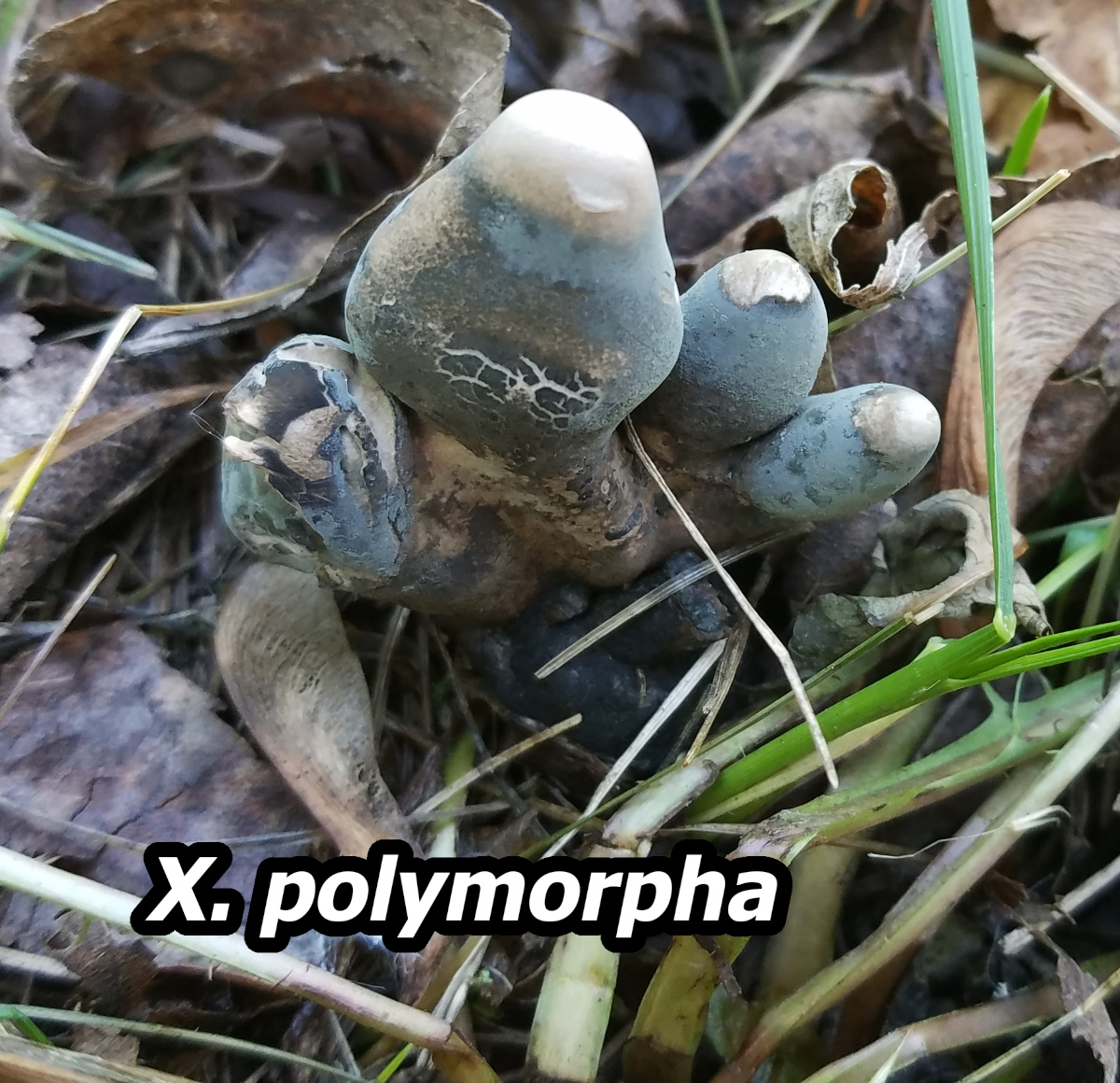
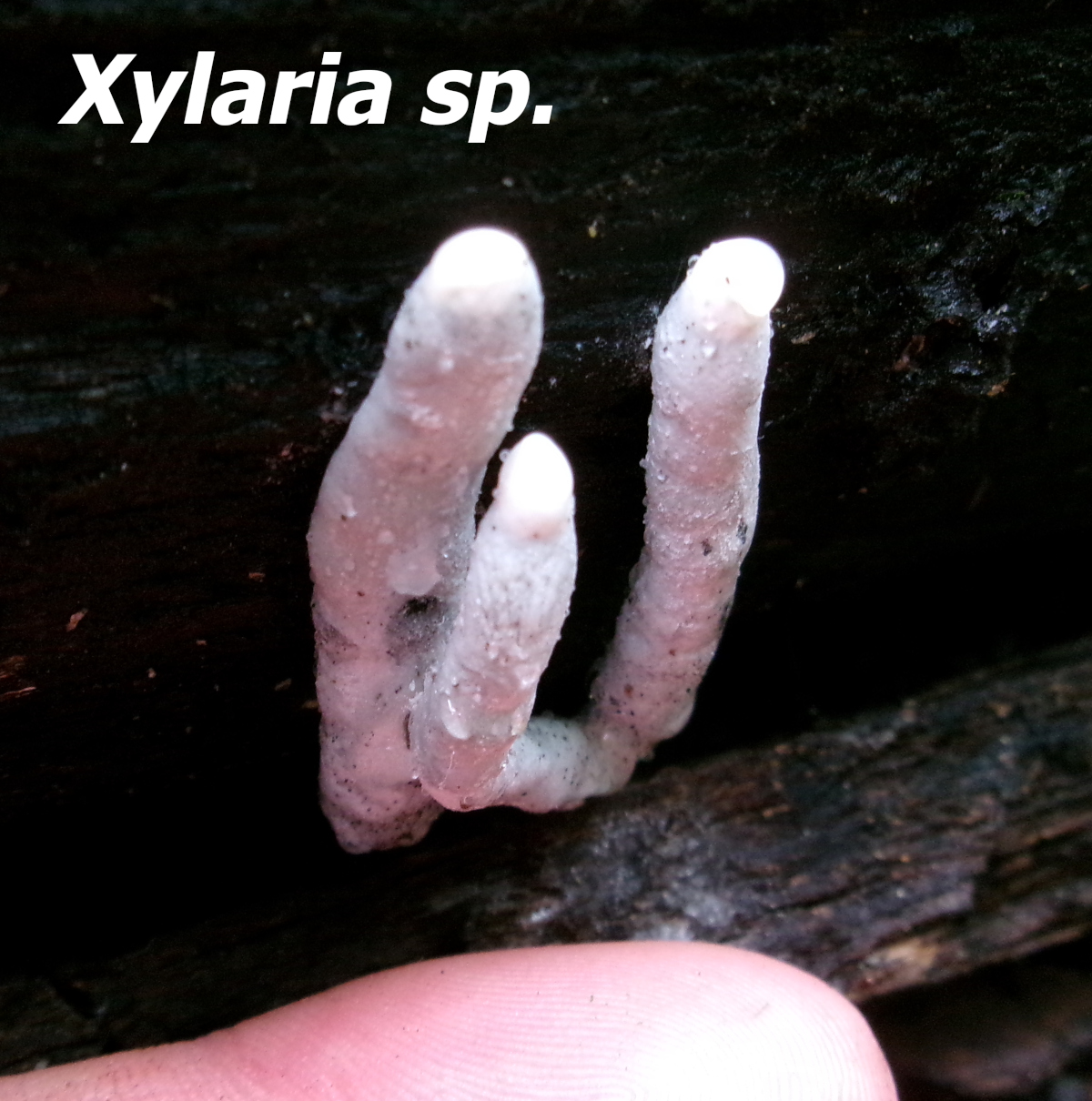
Xylaria sp.
- Common genera: X. polymorpha
- Habitat: Saprobe on wood (often buried)
Commonly called “Dead Man’s Fingers” these mushrooms can sometimes look like a zombie crawling out of the ground 🙂
 South Dakota Mycological Association